Executive Summary
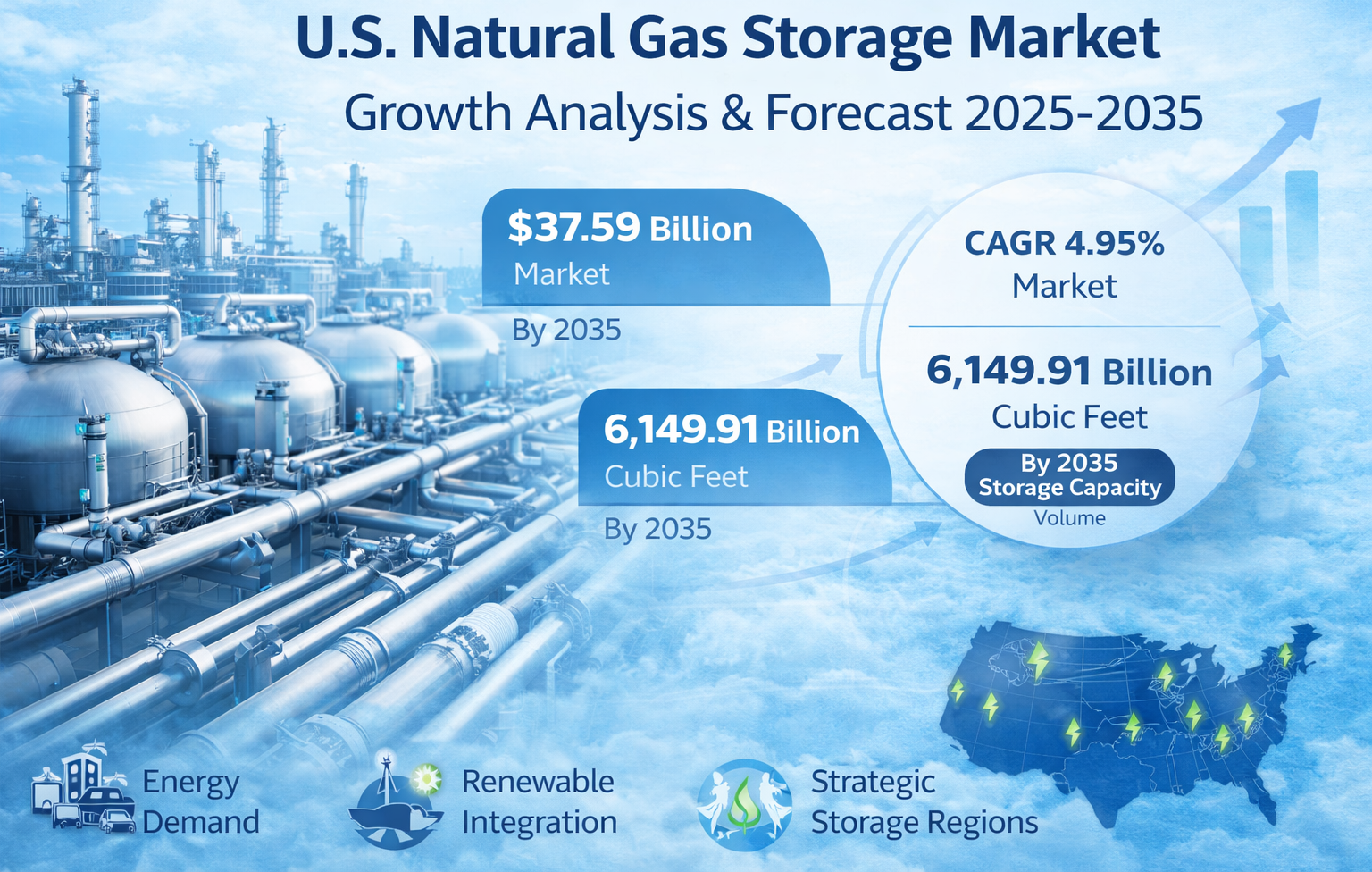
The U.S. natural gas storage market is experiencing steady growth, with a projected market size increase from USD 23.19 billion in 2025 to USD 37.59 billion by 2035, growing at a CAGR of 4.95% during the forecast period from 2026 to 2035. In terms of volume, the market is expected to expand from 4,211.00 billion cubic feet (Bcf) in 2025 to 6,149.91 Bcf by 2035, growing at a CAGR of 3.86%. The U.S. natural gas storage market is driven by increasing energy demand, a growing need for energy security, and advancements in storage technologies. The market plays a critical role in ensuring a stable and reliable natural gas supply during periods of peak demand and production fluctuations.
Key Drivers of the U.S. Natural Gas Storage Market
1. Energy Security and Demand Fluctuations
- The increasing reliance on natural gas as a cleaner energy source, particularly for electricity generation and heating, has amplified the need for efficient storage systems to balance supply and demand.
- Storage facilities help to manage seasonal fluctuations in demand, ensuring that natural gas is available when needed, especially during cold winters and hot summers when demand spikes.
2. Government Policies and Regulations
- U.S. government policies aimed at ensuring energy security and reducing carbon emissions are positively influencing the natural gas storage market.
- Regulatory frameworks and incentives for expanding storage infrastructure have led to investments in underground storage facilities and new technologies that can store natural gas more efficiently.
3. Technological Advancements
- Advancements in storage technologies, such as high-pressure storage tanks, salt caverns, and advanced compressor technologies, are making natural gas storage more efficient and cost-effective.
- The adoption of digital monitoring systems and AI-driven predictive maintenance tools is optimizing the performance and longevity of storage facilities, driving market growth.
4. Geopolitical and Market Volatility
- Geopolitical events and market volatility, particularly in global natural gas supply chains, are making reliable storage solutions even more critical. The U.S. natural gas storage market helps mitigate the impact of such disruptions by enabling flexible gas management.
Key Segments and Trends in the U.S. Natural Gas Storage Market
1. By Storage Type
- Underground Storage: The largest and most common method of natural gas storage, including salt cavern storage, depleted oil fields, and aquifer storage. This segment is expected to grow significantly due to its cost-effectiveness and ability to store large quantities of natural gas.
- Above-ground Storage: Used in certain applications where underground storage is not feasible, above-ground storage systems include pressurized tanks and LNG storage tanks. This segment is seeing incremental growth due to its flexibility and quick deployment capabilities.
2. By End-use Application
- Residential & Commercial: Increasing demand for heating and cooking applications, especially in colder regions, drives the need for robust storage systems.
- Industrial Applications: Natural gas storage is crucial for industries such as chemicals, refining, and power generation. These industries require a steady supply of natural gas to maintain continuous operations and avoid disruptions.
- Power Generation: The increasing adoption of natural gas for power generation, particularly in combined-cycle gas turbine plants, has boosted the demand for storage infrastructure to ensure consistent fuel supply.
- Transportation: The growth of compressed natural gas (CNG) for transportation and the need for LNG bunkering solutions are expected to drive growth in storage systems for transportation fueling.
3. By Region
- Northeast U.S.: This region remains a significant player in the market due to its high demand for natural gas heating during the winter months.
- Midwest U.S.: With a high concentration of industrial natural gas consumers, the Midwest is expected to see increasing storage demands.
- South and West U.S.: Growth in power generation and industrial applications in these regions is likely to drive storage expansion.
Competitive Landscape of the U.S. Natural Gas Storage Market
Key Market Players
- Kinder Morgan: A leading operator in the U.S. natural gas storage market, Kinder Morgan operates one of the largest networks of underground storage facilities, including Horizon Pipeline and El Paso Natural Gas.
- Cheniere Energy: Known for its investments in liquefied natural gas (LNG) storage and transportation, Cheniere also plays a significant role in natural gas storage for its LNG export terminals.
- Williams Companies: Williams is another major player, operating an extensive network of storage facilities, pipelines, and related infrastructure across the U.S.
- ONEOK: Specializing in natural gas infrastructure, ONEOK operates storage facilities that support industrial, residential, and power generation needs.
- DTE Energy: DTE operates storage facilities to support natural gas distribution in Michigan and neighboring states, ensuring supply reliability during seasonal demand fluctuations.
Recent Strategic Moves
- Expansion Projects: Companies like Kinder Morgan and Williams Companies have announced several expansion projects to enhance storage capacity and optimize the performance of existing facilities.
- Technological Innovations: The incorporation of smart sensors and AI-driven predictive tools by companies like Cheniere Energy and DTE Energy is enhancing the efficiency of natural gas storage operations.
- Sustainability Focus: Several key players are focusing on reducing methane emissions during storage operations and adopting greener technologies to meet regulatory and market expectations.
Technological Shifts and Emerging Trends
1. AI and Automation in Storage Operations
- Increasing use of artificial intelligence for predictive maintenance, demand forecasting, and supply chain management is optimizing storage operations, reducing downtime, and enhancing system reliability.
2. Increased Focus on Safety and Environmental Sustainability
- There is a growing trend towards incorporating safety systems and environmentally sustainable practices into storage facilities. This includes carbon capture and methane leak detection systems to minimize environmental impacts.
3. Development of New Storage Facilities
- New storage capacity is being developed in key regions with strategic pipelines to improve energy security and mitigate supply disruptions. Major companies are increasingly focusing on building high-capacity storage systems and investing in advanced storage technology.
Market Size and Forecast
Projected Market Size:
- 2025: USD 23.19 Billion
- 2026: USD 24.34 Billion
- 2035: USD 37.59 Billion
- CAGR (2026-2035): 4.95%
Projected Market Volume:
- 2025: 4,211.00 Billion Cubic Feet (Bcf)
- 2035: 6,149.91 Billion Cubic Feet (Bcf)
- Volume CAGR (2026-2035): 3.86%
Conclusion: The Future of the U.S. Natural Gas Storage Market
The U.S. natural gas storage market is positioned for steady growth over the next decade, driven by increasing demand for natural gas, energy security concerns, and advancements in storage technologies. With a projected market size of USD 37.59 billion by 2035, the market is expected to expand due to growing applications in residential, industrial, and power generation sectors. The adoption of digital technologies, environmental sustainability, and government policies supporting energy storage will play a key role in shaping the future of the market. Key players such as Kinder Morgan and Williams Companies are actively enhancing their infrastructure to meet the growing needs of consumers and industries. As the U.S. continues to transition towards a more sustainable energy future, the demand for reliable natural gas storage will remain critical to ensuring a stable and secure energy supply.
Contact Us https://www.towardschemandmaterials.com/contact-us
About Us
Towards Chem and Materials is a leading global consulting firm specializing in providing comprehensive and strategic research solutions across the chemical and materials industries. With a highly skilled and experienced consultant team, we offer a wide range of services designed to empower businesses with valuable insights and actionable recommendations.
Email: [email protected]
Web: https://www.towardschemandmaterials.com/
For Latest Update Follow Us: https://www.linkedin.com/company/towards-chem-and-materials/?viewAsMember=true


Leave a Reply