The U.S. fluoropolymer coating landscape is undergoing a significant transformation, evolving from its traditional roots in cookware to becoming a cornerstone material for the high-tech semiconductor, aerospace, and renewable energy sectors. As thermal stability and chemical inertness become non-negotiable in extreme operating environments, these coatings are being re-engineered to meet stricter performance and environmental standards.
The U.S. fluoropolymer coating market is positioned for robust growth as industrial demand for durable, low-friction, and chemically resistant surfaces accelerates. Valued at USD 1.85 billion in 2025, the market is estimated to grow to USD 1.97 billion in 2026. By 2035, the market is projected to reach USD 3.53 billion, expanding at a steady CAGR of 6.66% from 2026 to 2035. This growth is primarily fueled by the revitalization of domestic manufacturing, the transition toward electric vehicles (EVs), and the critical need for high-purity processing in the semiconductor industry.
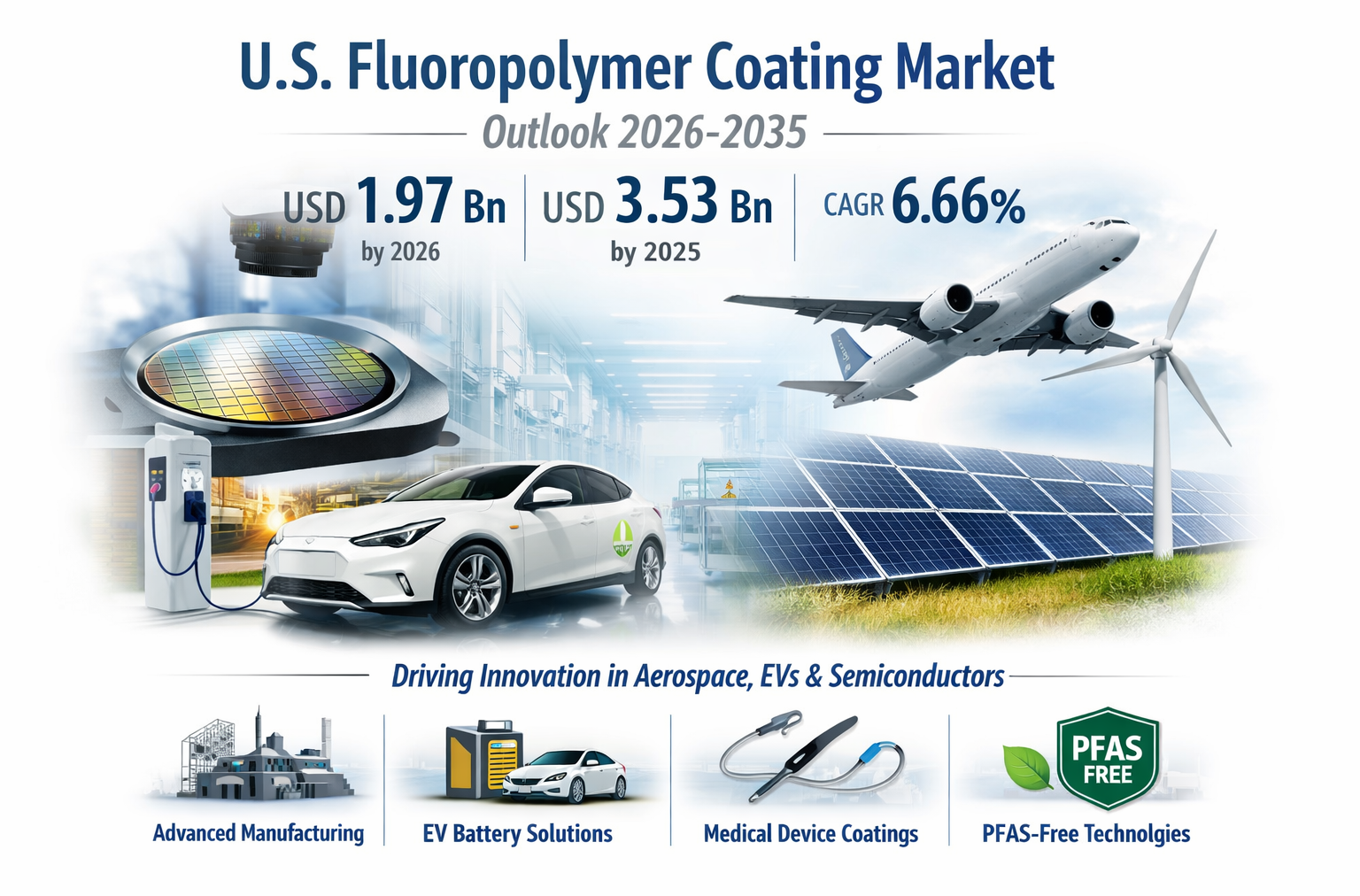
Market Overview: Why is the Fluoropolymer Coating Market Important?
Fluoropolymer coatings, including PTFE, FEP, and PFA, are unique due to their carbon-fluorine bonds—one of the strongest in organic chemistry. This molecular structure provides unparalleled resistance to chemicals, moisture, and extreme temperatures. In the U.S., this market is critical because it enables the functionality of infrastructure that would otherwise fail under stress. For instance, without these coatings, chemical processing plants would face constant corrosion-led shutdowns, and the aerospace sector would struggle with component wear and ice adhesion.
The market’s importance has surged with the “CHIPS Act” and the domestic push for semiconductor self-sufficiency. Fluoropolymer coatings are essential in fabrication facilities to prevent contamination and withstand the corrosive etching gases used in chip production. By providing a combination of non-stick properties and dielectric strength, these materials act as the silent enablers of modern electronics and high-performance engineering.
Market Dynamics: What Are the Key Factors Driving the Market?
The primary engine of the U.S. fluoropolymer coating market is the aggressive expansion of the aerospace and automotive sectors. In aerospace, the demand for fuel-efficient, lightweight components that can withstand high-altitude temperature fluctuations is driving the adoption of high-grade fluoropolymer sprays. In the automotive realm, the shift to EVs has created a new demand for these coatings in battery housing and cooling systems, where electrical insulation and thermal management are paramount.
Furthermore, the modernization of the U.S. medical device industry is a significant driver. Fluoropolymer coatings are increasingly used on surgical instruments and catheters to ensure biocompatibility and reduce friction during minimally invasive procedures. However, the market also faces a complex dynamic regarding the regulatory transition away from certain PFAS-related surfactants. This challenge is actually acting as a driver for innovation, as companies invest heavily in “PFAS-free” processing aids and newer, more sustainable fluoropolymer formulations to stay ahead of domestic environmental mandates.
What Are the Key Market Trends and Insights?
A defining trend in the U.S. is the shift from liquid coatings to advanced powder coating technologies. This move is driven by the need to reduce Volatile Organic Compounds (VOCs) and improve the durability of the protective layer in heavy industrial applications. Additionally, we are seeing the rise of “intelligent coatings”—fluoropolymer blends integrated with nano-fillers to enhance wear resistance or provide antimicrobial properties for healthcare environments.
[Insert Data Table: U.S. Fluoropolymer Coating Market Segmentation by Resin Type and End-Use, 2025-2035]
Technologically, the focus is shifting toward Low-Temperature Cure (LTC) fluoropolymers. Traditionally, these coatings required high baking temperatures, which limited the types of substrates (like certain plastics or sensitive electronics) they could be applied to. New LTC formulations are opening doors for fluoropolymer application in the consumer electronics and renewable energy sectors, where protecting heat-sensitive components is a major technical hurdle.
What Are the Market Recent Government Initiatives?
Government policy in the U.S. is currently a dual-edged sword for the fluoropolymer sector. On one hand, the Bipartisan Infrastructure Law is driving demand for durable coatings in bridge maintenance and energy grid protection. On the other hand, the EPA’s ongoing PFAS Strategic Roadmap is compelling manufacturers to find alternative chemistries for processing aids.
-
EPA Oversight: Strict reporting requirements on the manufacture and import of PFAS chemicals are forcing a supply chain audit, leading to a surge in demand for certified “sustainable” fluoropolymer grades.
-
DoE Grants: The Department of Energy has provided significant funding for the development of advanced materials used in hydrogen fuel cells, many of which utilize specialized fluoropolymer membranes and coatings for chemical stability.
-
CHIPS Act: Federal subsidies for domestic semiconductor manufacturing are indirectly boosting the market for high-purity PFA and PTFE coatings used in cleanroom equipment and chemical delivery systems.
Market Segments: Which Segment Accounted for the Largest Market Share?
The PTFE (Polytetrafluoroethylene) segment continues to account for the largest market share in the U.S., largely due to its ubiquitous use in both industrial and consumer applications. PTFE’s versatility—offering the best balance of heat resistance and non-stick properties—makes it the “gold standard” for everything from chemical valves to industrial bakeware. However, the PVDF (Polyvinylidene fluoride) segment is the fastest-growing application area, specifically within the energy storage and architectural coating sectors.
In terms of application, Industrial Processing leads the market. This includes the heavy-duty lining of tanks, pipes, and heat exchangers in the petrochemical and pharmaceutical industries. The Electrical & Electronics segment is trailing closely as the second-largest share-holder, driven by the massive U.S. investments in data centers and semiconductor manufacturing hubs in states like Arizona and Texas.
Competitive Landscape: Top Companies and Strategic Moves
The U.S. competitive environment is characterized by a mix of chemical giants and specialized coating applicators who are focusing on high-value, niche industrial sectors.
1. The Chemours Company
-
About: A global leader in fluoroproducts, spun off from DuPont, holding the iconic Teflon™ brand.
-
Products: Teflon™ PTFE, FEP, and PFA coatings; Nafion™ membranes.
-
Market Cap: Approximately USD 3.2 billion.
-
Strategic Move: Recently launched the “Teflon™ EcoSelect” line, focusing on more sustainable, high-performance formulations to meet evolving U.S. environmental standards.
2. Daikin Industries, Ltd. (Daikin America)
-
About: A Japanese multinational with a significant U.S. manufacturing presence in Alabama and New York.
-
Products: POLYFLON™ PTFE and NEOFLON™ PFA/FEP coatings.
-
Market Cap: Approximately USD 45 billion.
-
Strategic Move: Investing heavily in domestic R&D for fluoropolymer additives used in EV battery binders and high-purity semiconductor coatings.
3. PPG Industries, Inc.
-
About: A world leader in paints, coatings, and specialty materials headquartered in Pittsburgh.
-
Products: Corora™ and XYLAN® (via Whitford acquisition) fluoropolymer coatings.
-
Market Cap: Approximately USD 31 billion.
-
Strategic Move: Leveraging the acquisition of Whitford to provide specialized non-stick and low-friction solutions for the U.S. automotive and industrial sectors.
Recent Developments by Major Companies
Innovation is currently revolving around regulatory compliance and extreme performance. For example, 3M recently announced it would phase out PFAS manufacturing, a move that has sent shockwaves through the market and forced competitors to rapidly scale their non-PFAS processing aid production. Arkema has expanded its PVDF production capacity in the U.S. to support the surging demand from the domestic lithium-ion battery market. Meanwhile, companies like Whitford (a PPG company) have introduced “Next-Gen” FEP coatings that offer higher gloss and better abrasion resistance for the high-end consumer appliance market.
Conclusion: Future of the Market
The future of the U.S. fluoropolymer coating market will be defined by its ability to “decouple” high performance from environmental persistence. We are entering an era of “Circular Fluoropolymers,” where the focus will shift toward the recovery and recycling of coated materials. By 2035, we expect the market to be dominated by smart, self-healing coatings that can detect and repair micro-fissures in industrial pipes, significantly extending asset life. For stakeholders, the opportunity lies in the intersection of advanced semiconductor needs and the “Green” chemistry transition—those who can deliver purity and performance without the legacy chemical footprint will lead the market through the next decade.
Inquiries: [email protected] | Access our in-depth U.S. coating market intelligence reports for more.
Contact Us https://www.towardschemandmaterials.com/contact-us
About Us
Towards Chem and Materials is a leading global consulting firm specializing in providing comprehensive and strategic research solutions across the chemical and materials industries. With a highly skilled and experienced consultant team, we offer a wide range of services designed to empower businesses with valuable insights and actionable recommendations.
Web: https://www.towardschemandmaterials.com/
For Latest Update Follow Us: https://www.linkedin.com/company/towards-chem-and-materials/?viewAsMember=true


Leave a Reply