Market Overview
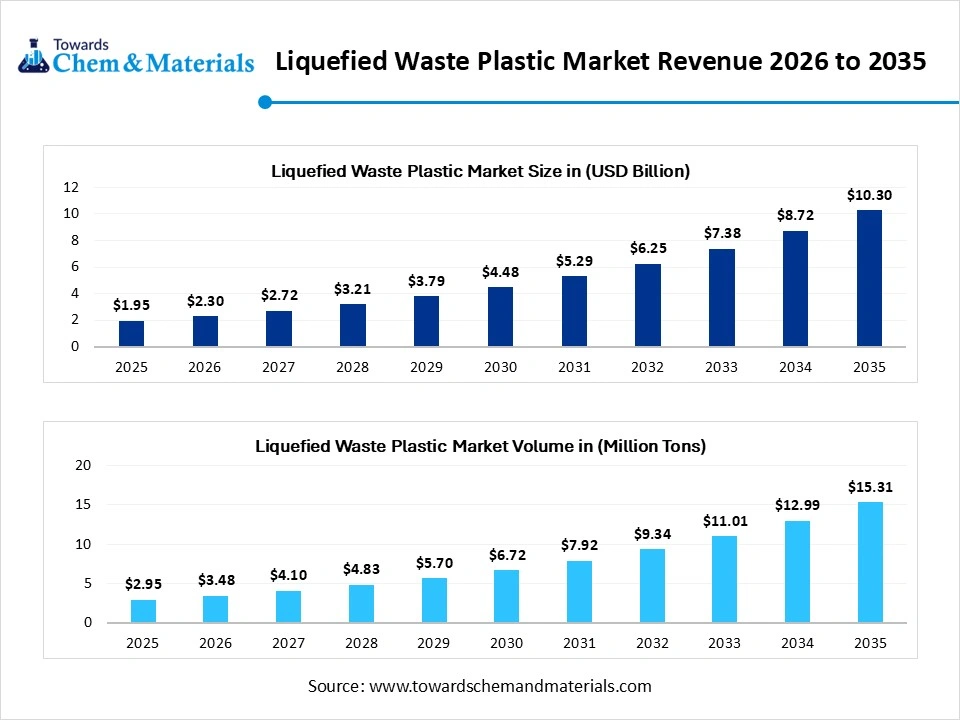
The liquefied waste plastic market is poised for rapid expansion, driven by increasing global awareness of plastic waste management and sustainability. The market, valued at USD 1.95 billion in 2025, is projected to reach USD 10.3 billion by 2035, reflecting an impressive compound annual growth rate (CAGR) of 18.11%. In terms of volume, the market is expected to grow from 2.95 million tons in 2025 to 15.31 million tons by 2035, marking a CAGR of 17.9%. This significant growth is supported by rising demand for chemical recycling solutions that convert non-recyclable plastic waste into high-quality fuel and feedstock, reducing the environmental burden of traditional plastic disposal methods.
The liquefaction process, particularly through pyrolysis, involves converting hard-to-recycle plastic waste into valuable circular oil feedstock, which can be used to produce virgin-quality polymers or substituted for fossil resources. This transformation addresses both environmental concerns and energy needs, promoting a circular economy where waste is repurposed into valuable resources.
Key Takeaways
- By region, Asia Pacific dominated the market with a share of 34% in 2025 and is expected to sustain its position while growing with the fastest CAGR of 20.40% in the forecast period.
- By region, Europe held 25% market share in 2025.
- By technology, the pyrolysis segment dominated the market with 68% share in 2025.
- By technology, the hydrothermal liquefaction segment is expected to have the fastest growth with a CAGR of 19.4% in the forecast period.
- By feedstock type, the polyethylene segment dominated the market with 34% share in 2025.
- By feedstock type, the mixed plastic waste segment is expected to have the fastest growth with a CAGR of 19.6% in the forecast period.
- By product type, the fuel oil segment dominated the market with 57% share in 2025.
- By product type, the chemical feedstock segment is expected to have the fastest growth with a CAGR of 19.8% in the forecast period.
- By end-use industry, the energy and power segment dominated the market with 36% share in 2025.
- By end-use industry, the chemical and petrochemical segment is expected to have the fastest growth with a CAGR of 20.2% in the forecast period.
Market Size and Volume Forecast
- Market Estimated Size (2025): USD 1.95 Billion | CAGR (2026–2035):18.11%
- Market Projected Size (2035): USD 10.30 Billion
- Market Volume (2025): 2.95 Million Tons (MT) | Volume CAGR (2026–2035): 17.9%
- Market Projected Volume (2035):15.31 Million Tons (MT)
- Market Pricing (2025):
- Average Manufacturing Price: USD 489/ton
- Average Selling Price: USD 727/ton
- Pricing CAGR (2025–2035): 4.11%
What Is Market Growth?
The liquefied waste plastic market is witnessing rapid growth, driven by significant technological advancements and an increasing demand for sustainable solutions. From a valuation of USD 1.95 billion in 2025, the market is expected to expand at a CAGR of 18.11%, reaching USD 10.3 billion by 2035. Alongside market value growth, the volume of liquefied plastic waste is also increasing, with projections showing an increase from 2.95 million tons in 2025 to 15.31 million tons by 2035. This is a clear indicator of the market’s growing adoption, as more industries and countries look to convert plastic waste into valuable feedstock and fuel.
The demand for liquefied waste plastic is growing in parallel with global efforts to reduce plastic waste, enhance recycling technologies, and promote a more sustainable, circular economy.
Key Market Trends
- Technological Advancements in Chemical Recycling: The development of advanced pyrolysis technologies is a key trend in the liquefied waste plastic market. These technologies convert plastics that are not typically recyclable into high-quality oils that can be used in various industries, such as manufacturing and energy generation. This innovation is improving the efficiency and cost-effectiveness of plastic-to-fuel and plastic-to-feedstock processes.
- Circular Economy Focus: The global push for a circular economy is directly impacting the liquefied waste plastic market. By turning waste plastic into high-quality, reusable feedstock, the market plays a crucial role in closing the loop between production, consumption, and recycling. This trend is expected to continue as governments and businesses increase their focus on sustainability.
- Environmental Impact Reduction: With concerns over plastic pollution growing globally, there is a significant shift towards waste-to-energy solutions. Chemical recycling methods, such as pyrolysis, not only reduce plastic waste but also help reduce greenhouse gas emissions, making this market a key player in global environmental sustainability efforts.
- Increasing Demand for Feedstock and Fuel: As industries seek alternative energy sources, liquefied waste plastic offers a valuable feedstock for the production of high-quality polymers and biofuels. This trend is fueling the market’s expansion, particularly as demand for renewable energy and sustainable materials continues to rise.
Market Recent Government Initiatives
Governments worldwide are ramping up efforts to support the liquefied waste plastic market through several key initiatives:
- Plastic Waste Management Regulations: Governments are introducing stricter regulations to manage plastic waste more effectively. Many countries are now mandating that a significant portion of plastic waste must be recycled or converted into alternative products, such as biofuels or feedstock, directly supporting the market for liquefied waste plastic.
- Incentives for Recycling Technologies: Governments are offering financial incentives, subsidies, and grants to businesses investing in recycling technologies, especially those focused on the chemical recycling of plastics. These policies encourage innovation in the liquefied waste plastic sector, fostering the development of new solutions for plastic waste conversion.
- Sustainability Commitments: With sustainability becoming a global priority, many governments are setting ambitious targets to reduce plastic waste and carbon footprints. Liquefied waste plastic technologies are positioned as a critical tool in meeting these sustainability goals.
Market Benefits of Using Liquefied Waste Plastic
- Waste Reduction: One of the primary benefits of liquefying waste plastic is its ability to reduce plastic pollution. By converting plastic waste into valuable fuel and feedstock, the environmental burden of plastic waste is significantly reduced, helping alleviate pressure on landfills and oceans.
- Energy Generation: Liquefied plastic can be used as a source of energy. Pyrolysis oil produced from waste plastics can serve as an alternative fuel for industries, reducing the reliance on fossil fuels and contributing to energy sustainability.
- Economic Value: By turning waste into a valuable commodity, the liquefied waste plastic market generates economic value. This process opens up new business opportunities and creates jobs in the recycling and renewable energy sectors.
- Sustainability: Converting plastic waste into usable resources supports the transition to a circular economy. It helps reduce the need for virgin plastic production, promotes the reuse of materials, and minimizes the environmental impact of plastic consumption.
What Are the Key Factors Driving The Market?
- Increasing Plastic Waste Generation: The growing volume of plastic waste, coupled with rising consumer demand for sustainable solutions, is one of the key drivers of market growth. This waste, which is difficult to recycle using traditional methods, creates a significant opportunity for liquefaction technologies.
- Advancements in Recycling Technologies: The development of advanced chemical recycling technologies, particularly pyrolysis, is making the conversion of plastic waste into valuable feedstock and fuels more efficient and commercially viable.
- Government Regulations and Policies: Governments worldwide are enacting regulations that require the reduction of plastic waste and the promotion of recycling. These policies create a favorable environment for the growth of the liquefied waste plastic market.
- Consumer and Corporate Sustainability: The increasing emphasis on sustainability by consumers and corporations is pushing industries to adopt cleaner, more sustainable production methods, which further drives demand for liquefied plastic as a feedstock.
What Is the Future of the Market?
The future of the liquefied waste plastic market is highly promising. As technology continues to improve and global plastic waste becomes an increasingly urgent issue, demand for chemical recycling solutions like liquefaction will continue to rise. By 2035, the market is expected to experience significant growth, with the volume of liquefied waste plastic reaching 15.31 million tons. This market’s growth is also linked to its potential to contribute to the circular economy, helping reduce the need for virgin plastic production and lowering overall environmental impact.
As regulations become stricter, and as more industries embrace sustainable practices, liquefied waste plastic technologies will play a pivotal role in achieving global waste management and sustainability goals.
Why Is This Market Important?
The liquefied waste plastic market is crucial for addressing the global plastic waste crisis. Plastic waste, which takes hundreds of years to decompose, is one of the most pervasive environmental issues of our time. By converting this waste into valuable resources like fuel and feedstock, this market not only reduces pollution but also helps create renewable energy and sustainable materials. Additionally, it plays a vital role in helping companies and countries meet their sustainability targets, making it an essential component of a cleaner, greener future.
Key Companies to Mention
Some of the key players in the liquefied waste plastic market include:
- Plastic Energy: A leading company in the field of chemical recycling, specializing in converting plastic waste into high-quality oils.
- Agilyx: A pioneer in advanced recycling technologies, Agilyx focuses on turning plastic waste into valuable raw materials.
- Verdant Earth Technologies: Specializing in the pyrolysis process, Verdant Earth Technologies converts plastic waste into usable oil and fuel.
- Loop Industries: Known for its sustainable PET plastic recycling processes, Loop Industries is advancing the chemical recycling space with new technologies for waste plastics.
- Pyrocrat Systems: A key player in the pyrolysis technology market, Pyrocrat specializes in providing high-quality, cost-effective solutions for plastic waste liquefaction.
Which Segment Accounted for the Largest Market Share?
The pyrolysis segment currently holds the largest market share in the liquefied waste plastic market. Pyrolysis is a widely adopted method for converting plastic waste into oil and gas, due to its efficiency and scalability. This segment is expected to continue dominating the market, as pyrolysis technology is not only capable of handling a wide range of plastic types but also offers an economically viable solution for producing high-value fuels and feedstock. Pyrolysis plays a key role in the growing demand for sustainable and renewable energy sources, making it a vital part of the liquefied waste plastic market.
Contact Us https://www.towardschemandmaterials.com/contact-us
About Us
Towards Chem and Materials is a leading global consulting firm specializing in providing comprehensive and strategic research solutions across the chemical and materials industries. With a highly skilled and experienced consultant team, we offer a wide range of services designed to empower businesses with valuable insights and actionable recommendations.
Email: [email protected]
Web: https://www.towardschemandmaterials.com/
For Latest Update Follow Us: https://www.linkedin.com/company/towards-chem-and-materials/?viewAsMember=true


Leave a Reply