The Europe Sustainable Aviation Fuel (SAF) market is poised for significant growth, with projections indicating an increase from USD 5.11 billion in 2025 to USD 84.91 billion by 2035. This market is expected to grow at a Compound Annual Growth Rate (CAGR) of 32.45% from 2026 to 2035, driven by the increasing demand for greener and more sustainable energy solutions within the aviation industry. In terms of volume, the market is projected to surge from 2.15 million tons in 2025 to 40.58 million tons by 2035, growing at a robust CAGR of 34.15%.
The emergence of SAF as a key solution for reducing aviation carbon emissions plays a pivotal role in accelerating market expansion. Regulatory support, technological advancements, and shifts in consumer preference towards sustainability are among the primary factors contributing to this growth trajectory.
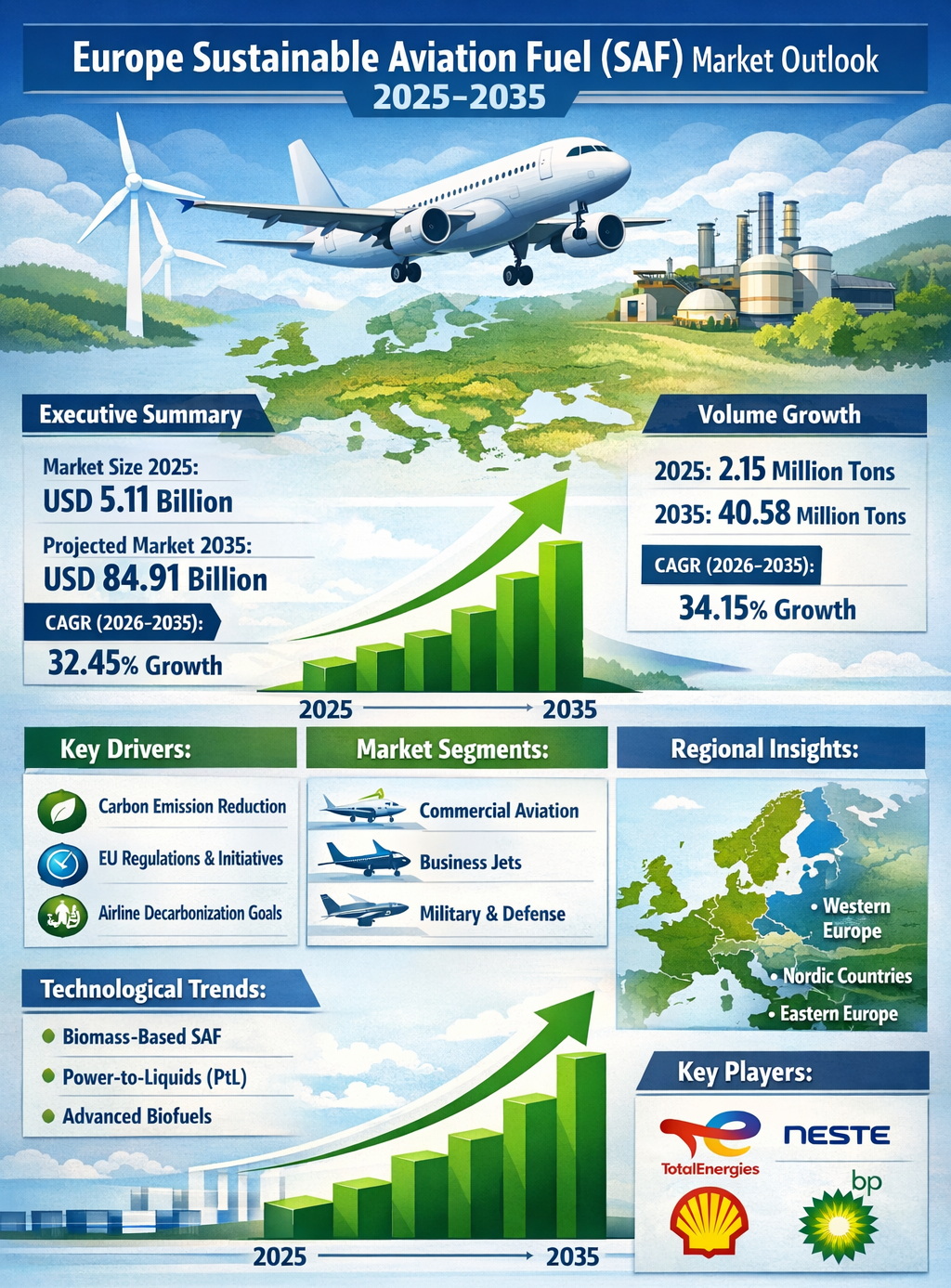
What is Sustainable Aviation Fuel (SAF)?
Sustainable Aviation Fuel (SAF) is a biofuel produced from renewable resources, including plant oils, waste oils, and algae, designed as a replacement for traditional jet fuel. SAF has the potential to significantly reduce lifecycle greenhouse gas emissions compared to conventional aviation fuel. Its adoption is critical to the aviation industry’s decarbonization efforts and achieving net-zero emissions by 2050.
Key Drivers for Growth in the SAF Market
Several factors are contributing to the rapid growth of the SAF market in Europe:
- Regulatory and Policy Support:
- European governments have implemented stringent emissions regulations, pushing the aviation industry towards cleaner alternatives like SAF.
- The European Union’s Green Deal and related policies are pivotal in driving SAF adoption across the region.
- The implementation of SAF mandates in certain countries is accelerating industry investments.
- Technological Advancements:
- Ongoing improvements in SAF production technologies, such as the development of more efficient and cost-effective production pathways, are enhancing SAF availability.
- Investments in carbon capture technologies and waste-to-fuel processes are crucial for scaling SAF production.
- Growing Consumer Demand for Sustainability:
- With increasing environmental awareness, travelers are showing more preference for airlines that use sustainable fuel alternatives.
- Airlines are also under pressure to demonstrate their sustainability efforts to meet consumer expectations and regulatory requirements.
- Airlines’ Commitment to Net-Zero Goals:
- Many major European airlines have pledged to reduce their carbon emissions, and SAF is a core element of these strategies.
- Airline commitments to purchase SAF in large volumes are driving investments and production capacity expansion.
Market Segmentation
By Type of SAF:
- Bio-based SAF: Derived from plant oils, waste, and algae. This segment is expected to dominate due to its established production pathways and ability to achieve significant emissions reductions.
- Synthetic SAF: Produced using processes such as power-to-liquid (PtL) and gas-to-liquid (GtL). This segment is emerging rapidly, driven by advancements in hydrogen and carbon capture technologies.
By Application:
- Commercial Aviation: The largest segment, driven by the push for decarbonization of major airlines.
- Military Aviation: Increasing interest in SAF for military fleets as part of defense sustainability initiatives.
- Cargo Aviation: Growing interest in reducing emissions from cargo flights.
By Distribution Channel:
- Direct Fuel Supply: SAF is directly supplied to airlines by producers.
- Third-party Logistics Providers: SAF distributors play an important role in the supply chain, facilitating fuel delivery to airports.
By Region:
- Western Europe: Leads the market, with countries like the UK, France, and Germany at the forefront of SAF adoption due to regulatory pressure and strong sustainability initiatives.
- Northern Europe: Sweden, Denmark, and Norway are also major contributors, with progressive sustainability policies and infrastructure for SAF.
- Southern Europe: Countries like Spain and Italy are ramping up investments in SAF production to meet EU carbon reduction targets.
Emerging Technological Trends
- Power-to-Liquid (PtL) Technologies:
- PtL technologies are gaining attention as a long-term solution for SAF production, utilizing renewable electricity and CO2 to produce synthetic fuels.
- Significant investments are being made in PtL technology development in Europe, driven by green hydrogen initiatives.
- Waste-to-Fuel Processes:
- Utilizing waste products such as agricultural residues and municipal solid waste to produce SAF is a growing trend. This method not only reduces emissions but also helps in waste management.
- Advanced Algae-Based SAF Production:
- Algae-based SAF production holds promise as an efficient and sustainable method, although it remains in early stages. Investments in research and pilot projects are increasing.
Competitive Landscape
The SAF market is highly competitive, with several players focusing on technological advancements, strategic partnerships, and regulatory compliance to capture market share. Key market players include:
- Neste: A leading global producer of renewable diesel and SAF, Neste has established strategic partnerships with major airlines and fuel providers.
- Air BP: The aviation fuel division of BP, Air BP is investing heavily in SAF production and has signed agreements with major European airlines.
- TotalEnergies: TotalEnergies is expanding its SAF production capacity and is involved in several SAF joint ventures and partnerships in Europe.
- LanzaTech: A pioneer in gas fermentation technology, LanzaTech is actively engaged in SAF production, utilizing waste gases to produce sustainable aviation fuels.
These companies are working together with governments, airlines, and technology providers to scale SAF production and infrastructure, positioning themselves as key players in the rapidly growing market.
Challenges and Barriers to Growth
Despite the promising growth prospects, the SAF market faces several challenges:
- High Production Costs:
- SAF is still more expensive than conventional jet fuel, which limits its widespread adoption, especially in a cost-sensitive industry like aviation.
- Ongoing innovation and economies of scale are expected to drive down production costs over time.
- Limited Production Capacity:
- Although SAF production is ramping up, there is still limited infrastructure in place to meet the growing demand, particularly in Europe’s key aviation hubs.
- Significant investments in production facilities and supply chains are required to meet projected demand by 2035.
- Regulatory and Certification Hurdles:
- SAF certification processes and compliance with international aviation regulations can delay market expansion.
- Governments and industry bodies must streamline regulations to encourage faster adoption.
Conclusion: Future Outlook
The Europe SAF market is on the cusp of substantial growth, driven by regulatory pressures, technological advancements, and a collective push toward sustainable aviation. By 2035, the market is expected to reach USD 84.91 billion, fueled by an increasing volume of SAF production to meet the decarbonization targets set by the aviation industry.
The market’s growth will hinge on overcoming challenges related to production costs, infrastructure, and regulatory hurdles. However, the substantial investments in SAF technologies and the broad support from governments and airlines will likely position SAF as the future of aviation fuel in Europe.
In the coming years, the adoption of SAF will become a cornerstone of the aviation industry’s strategy to meet global environmental targets, driving both innovation and growth across Europe.
| Year | Market Size (USD Billion) | Market Volume (Million Tons) |
|---|---|---|
| 2025 | 5.11 | 2.15 |
| 2026 | 6.77 | 2.90 |
| 2027 | 9.10 | 3.65 |
| 2028 | 12.08 | 4.50 |
| 2029 | 15.95 | 5.60 |
| 2030 | 21.10 | 7.20 |
| 2031 | 29.65 | 9.50 |
| 2032 | 39.88 | 12.50 |
| 2033 | 61.45 | 20.40 |
| 2034 | 75.73 | 30.00 |
| 2035 | 84.91 | 40.58 |
This report provides a detailed overview of the Europe Sustainable Aviation Fuel market, covering key market drivers, trends, and strategic insights to support stakeholders in making informed decisions.
Contact Us https://www.towardschemandmaterials.com/contact-us
About Us
Towards Chem and Materials is a leading global consulting firm specializing in providing comprehensive and strategic research solutions across the chemical and materials industries. With a highly skilled and experienced consultant team, we offer a wide range of services designed to empower businesses with valuable insights and actionable recommendations.
Email: [email protected]
Web: https://www.towardschemandmaterials.com/
For Latest Update Follow Us: https://www.linkedin.com/company/towards-chem-and-materials/?viewAsMember=true


Leave a Reply