Executive Summary
The global Ethylene Propylene Diene Monomer (EPDM) market is on a steady upward trajectory, supported by its critical role in automotive sealing systems, roofing membranes, and electrical insulation.
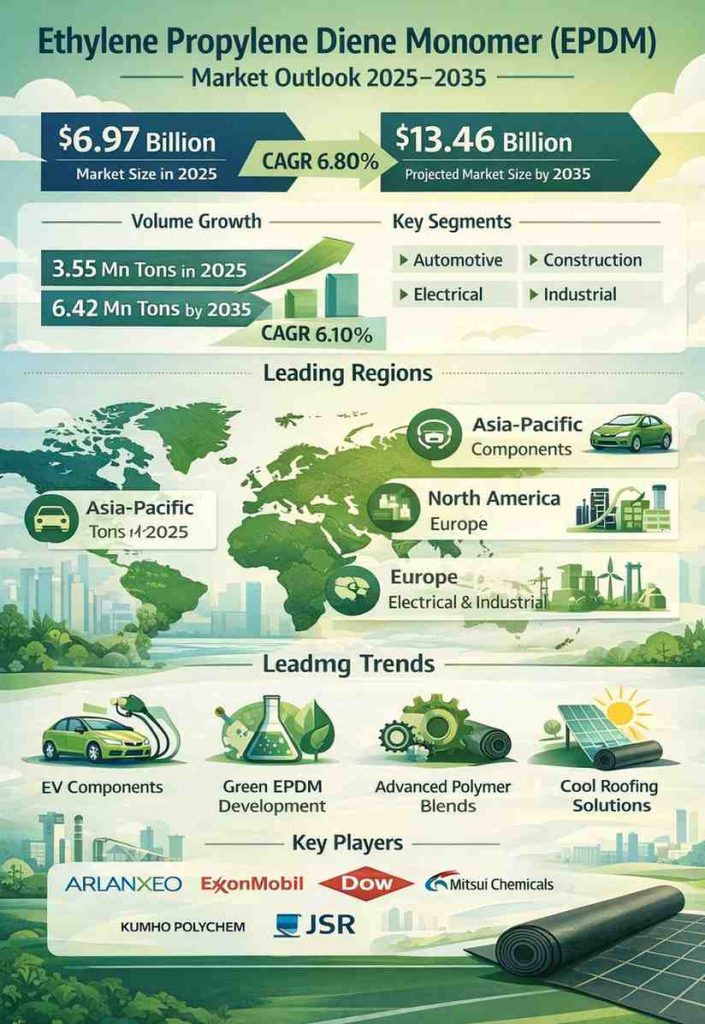
- Market size stood at USD 6.97 billion in 2025
- Expected to reach USD 13.46 billion by 2035
- Expanding at a CAGR of 6.80% (2026–2035)
Volume insights:
- Growth from 3.55 million tons (2025) to 6.42 million tons (2035)
- Volume CAGR of 6.10%
By 2032 (mid-cycle outlook):
- Market is projected to exceed ~USD 10.8–11.2 billion, reflecting strong demand across industrial and infrastructure sectors.
This growth reflects EPDM’s increasing relevance as a durable, weather-resistant, and cost-effective elastomer, particularly in sustainability-focused applications.
What is Ethylene Propylene Diene Monomer (EPDM)?
EPDM is a synthetic rubber (terpolymer) composed of:
- Ethylene
- Propylene
- Diene monomers
It is widely valued for:
- Excellent weather and UV resistance
- Superior thermal stability
- Strong electrical insulation properties
These attributes make EPDM indispensable in automotive, construction, and industrial applications.
What Are the Primary Drivers of the EPDM Market?
1. Automotive Industry Expansion
EPDM is extensively used in:
- Door seals and weatherstrips
- Hoses and gaskets
- Under-the-hood components
With the rise of EVs, EPDM demand is increasing due to:
- Thermal management requirements
- Lightweight material adoption
2. Growth in Construction & Infrastructure
EPDM plays a key role in:
- Roofing membranes
- Waterproofing systems
- Expansion joints
Urbanization and smart city projects are significantly boosting demand.
3. Shift Toward Sustainable Materials
EPDM supports sustainability through:
- Long lifecycle and recyclability
- Energy-efficient building applications
4. Industrial & Electrical Applications
- Cable insulation
- Industrial belts and seals
- HVAC systems
What Are the Key Market Segments?
By Application
- Automotive Components
- Building & Construction (Roofing, Waterproofing)
- Electrical & Electronics
- Industrial & Consumer Goods
By Product Type
- Solid EPDM
- Liquid EPDM
By End-Use Industry
- Automotive
- Construction
- Electrical & Electronics
- Manufacturing
Which Regions Are Driving Market Growth?
Asia-Pacific: Dominant & Fastest Growing
- Largest consumption hub
- Strong automotive manufacturing base (China, India, Japan)
- Rapid infrastructure development
North America: Mature Yet Innovative
- High demand in roofing and construction
- Growth in EV production
Europe: Sustainability-Led Demand
- Stringent environmental regulations
- Increasing adoption of recyclable materials
LAMEA: Emerging Potential
- Infrastructure expansion
- Rising industrialization
What Are the Emerging Trends in the EPDM Market?
1. EPDM in Electric Vehicles (EVs)
- Enhanced demand for heat-resistant elastomers
- Application in battery sealing systems
2. Green EPDM Development
- Bio-based feedstocks
- Reduced carbon footprint production
3. Advanced Polymer Blends
- Improved mechanical properties
- Enhanced durability for extreme conditions
4. Roofing System Innovations
- Cool roofing solutions
- Reflective EPDM membranes
Competitive Landscape: Who Are the Key Players?
The EPDM market is moderately consolidated, with leading players focusing on capacity expansion, innovation, and sustainability.
Major Companies
- ARLANXEO
- ExxonMobil Chemical
- Dow Inc.
- Mitsui Chemicals
- Kumho Polychem
- JSR Corporation
Recent Strategic Developments
- ARLANXEO expanding global EPDM production capacity to meet automotive demand
- ExxonMobil focusing on high-performance elastomer innovations
- Dow Inc. investing in sustainable polymer technologies
- Kumho Polychem strengthening its footprint in Asia-Pacific
Competition is increasingly shifting toward performance differentiation and eco-friendly product lines, rather than pure pricing strategies.
What Challenges Could Impact Market Growth?
- Volatility in raw material prices (ethylene & propylene)
- Environmental concerns related to synthetic rubber production
- Competition from alternative elastomers (TPE, silicone rubber)
- Supply chain disruptions
Future Outlook: What Lies Ahead for the EPDM Market?
The EPDM market is expected to evolve into a technology-driven, sustainability-focused segment within the global elastomers industry.
Key Future Opportunities
- Integration in EV and renewable energy systems
- Development of recyclable and bio-based EPDM
- Expansion in emerging economies
- Increased use in smart infrastructure
Conclusion
The global EPDM market is positioned for consistent, long-term growth, underpinned by its versatility and performance advantages. As industries move toward durability, energy efficiency, and sustainability, EPDM will remain a material of choice across critical applications.
With the market projected to surpass USD 13 billion by 2035, stakeholders who invest in innovation, regional expansion, and green chemistry will be best placed to capitalize on the next phase of industry evolution.
In essence, EPDM is no longer just a commodity elastomer—it is becoming a strategic material in the transition toward resilient and sustainable industrial ecosystems


Leave a Reply