Market Overview
The Asia-Pacific polyamide market is experiencing robust growth, with the market size estimated at USD 28.84 billion in 2025. This market is projected to grow significantly, reaching USD 57.53 billion by 2035, with a compound annual growth rate (CAGR) of 7.15% from 2026 to 2035. In terms of volume, the polyamide market in this region is expected to expand from 12.85 million tons in 2025 to 24.23 million tons by 2035, growing at a CAGR of 6.55%.
Polyamides, often known as nylons, are used in a wide array of applications, including textiles, automotive, electronics, and packaging, contributing to the growth of the market. With Asia-Pacific emerging as a dominant manufacturing hub, the demand for polyamide in both industrial and consumer products is expected to keep rising.
What is Market Growth?
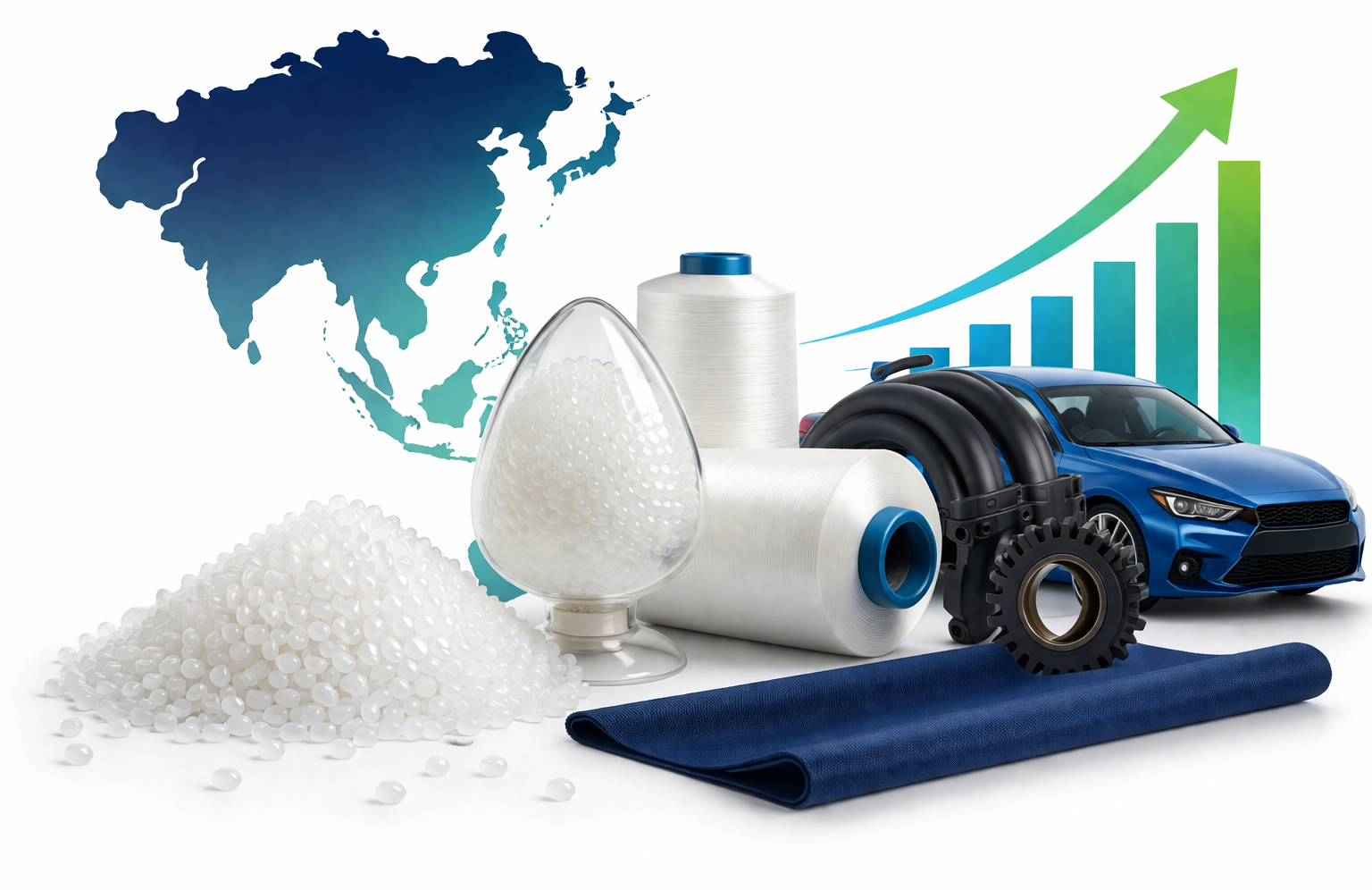
The Asia-Pacific polyamide market is set for impressive growth over the next decade. The forecasted growth rate of 7.15% CAGR from 2026 to 2035 reflects a continued demand for polyamide across key industries such as automotive, textiles, and electronics. As more manufacturers in Asia-Pacific scale their operations and enhance production capabilities, the market’s value will continue to increase, almost doubling by 2035.
This expansion is also driven by increasing investments in the region’s manufacturing infrastructure, coupled with the increasing use of polyamide in high-performance applications.
What are Key Market Trends?
Several trends are shaping the future of the Asia-Pacific polyamide market:
- Shift Towards Sustainable Production: There is a growing push for eco-friendly materials and sustainable manufacturing practices. As a result, the production of bio-based polyamides is gaining traction in the Asia-Pacific region. These eco-friendly alternatives are driving the demand for polyamides that are more sustainable and have a lower environmental footprint.
- Rising Use in Automotive: Polyamide’s superior strength-to-weight ratio is making it increasingly popular in automotive manufacturing. Polyamide parts help reduce vehicle weight, improve fuel efficiency, and enhance overall vehicle performance. The rising demand for lightweight materials in the automotive sector is pushing polyamide consumption in this industry.
- Increasing Demand for Electronics: Polyamide is gaining momentum in the electronics sector due to its excellent insulation properties and resistance to heat. It is used in components such as connectors, cables, and semiconductor packaging, further propelling market growth.
What are Market Recent Government Initiatives?
Governments across Asia-Pacific are implementing policies and regulations to promote the use of sustainable materials and technologies, which is affecting the polyamide market:
- Regulation on Plastic Waste: With a focus on reducing plastic waste, governments in countries like China and India are encouraging industries to adopt more sustainable alternatives. This has led to increased research into bio-based polyamides, which can offer a more environmentally friendly solution to traditional plastics.
- Incentives for Green Manufacturing: Some countries are providing financial incentives and subsidies for manufacturers that incorporate green production processes, including the use of renewable raw materials for polyamide production. These initiatives aim to drive industrial growth while minimizing environmental impact.
- Environmental Standards for Textiles: With the textile industry being a major consumer of polyamides, countries are enforcing stricter regulations on the environmental impact of textile production. This is prompting textile manufacturers to shift towards more sustainable polyamide materials that comply with eco-friendly standards.
What are the Market Benefits of Using Polyamide?
Polyamide offers a variety of benefits that make it a material of choice across different industries:
- Durability and Strength: Polyamides are known for their exceptional durability and resistance to wear, making them ideal for demanding applications in automotive and industrial settings.
- Lightweight and High-Performance: Polyamide’s lightweight properties make it perfect for use in industries where reducing weight is crucial, such as in automotive manufacturing, where fuel efficiency and performance are key concerns.
- Versatility in Applications: Polyamide can be tailored to meet specific requirements, such as heat resistance, electrical insulation, and chemical resistance, making it suitable for a wide range of applications from textiles to electronics.
- Eco-Friendly Alternatives: Bio-based polyamides are gaining popularity as they are derived from renewable resources, offering an eco-conscious alternative to traditional petroleum-based polyamides
What Are the Key Factors Driving the Market?
The Asia-Pacific polyamide market’s growth can be attributed to several key factors:
- Industrial Growth in Asia-Pacific: The region is home to some of the world’s largest manufacturing hubs, including China, Japan, and India. As industrial activity increases, particularly in automotive, construction, and textiles, the demand for polyamides is set to rise substantially.
- Increasing Demand for Lightweight Materials: The push for lighter, stronger materials in the automotive and aerospace sectors is a major driver for polyamide adoption. Polyamide’s ability to reduce vehicle weight while maintaining structural integrity makes it a preferred material in manufacturing.
- Growing Textile Industry: The textile and apparel industry is a major consumer of polyamide, with increasing demand for high-performance fabrics. Polyamide fibers are used in clothing, sportswear, and technical textiles due to their durability and elasticity.
- Technological Advancements: Continuous improvements in polyamide manufacturing processes, such as the development of high-performance grades and better recycling methods, are expanding the scope of polyamide applications.
What is the Future of the Market?
The future of the Asia-Pacific polyamide market looks promising, with consistent growth expected through 2035. The demand for polyamide will continue to increase as industries like automotive, electronics, and textiles require more advanced, high-performance materials.
The shift towards sustainable production, including the rise of bio-based polyamides, will be a major driver in the coming years. The development of new polyamide applications in industries such as renewable energy and electronics will further bolster market expansion.
Why is the Market Important?
The polyamide market is crucial due to the material’s widespread use across various high-performance sectors. It provides essential properties such as durability, strength, and resistance to heat, making it an ideal choice for industries that require robust, lightweight materials.
As industries transition towards more sustainable practices, the polyamide market will play a significant role in helping companies meet their environmental and performance goals. The Asia-Pacific region, with its growing industrial sector, will continue to be a key driver of polyamide demand.
Which Segment Accounted for the Largest Market Share?
The textile and apparel segment currently accounts for the largest share of the polyamide market in Asia-Pacific. Polyamide is widely used in clothing, sportswear, and industrial textiles due to its strength, elasticity, and ability to retain color and shape. As the textile industry continues to grow in countries like China and India, this segment is expected to remain dominant through 2035.
About Us
Towards Chemical and Materials is a leading global consulting firm specializing in providing comprehensive and strategic research solutions across the chemical and materials industries. With a highly skilled and experienced consultant team, we offer a wide range of services designed to empower businesses with valuable insights and actionable recommendations.
Our Trusted Data Partners
Precedence Research | Statifacts | Towards Packaging | Towards Healthcare | Towards Food and Beverages | Towards Chemical and Materials | Towards Consumer Goods | Nova One Advisor |
For Latest Update Follow Us: https://www.linkedin.com/company/towards-chem-and-materials/
USA: +1 804 441 9344
APAC: +61 485 981 310 or +91 87933 22019
Europe: +44 7383 092 044
Email: [email protected]


Leave a Reply