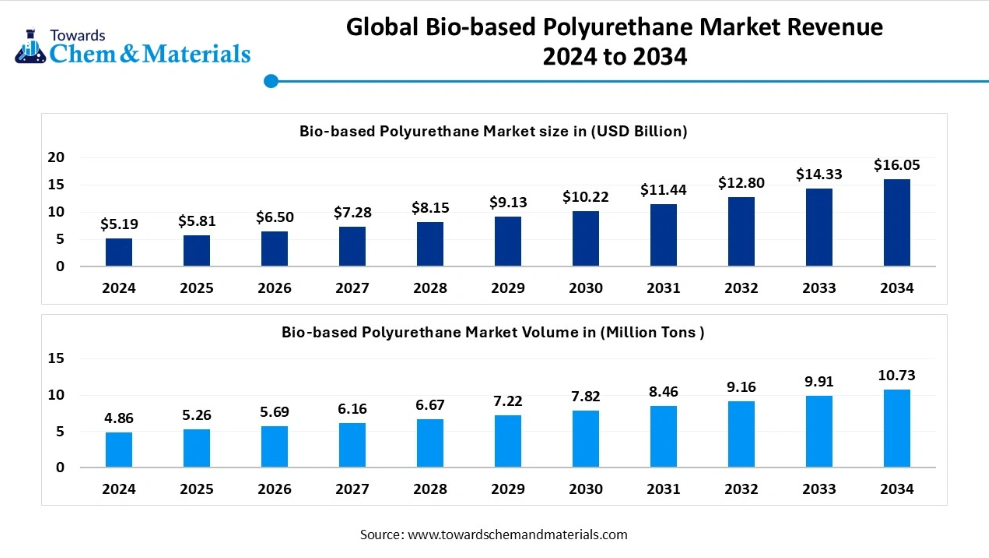
According to Towards Chemical and Materials the global bio-based polyurethane market volume was reached at 4.86 million tons in 2024 and is expected to be worth around 10.73 million tons by 2034, growing at a compound annual growth rate (CAGR) of 8.24% over the forecast period 2025 to 2034
Market Overview
The bio-based polyurethane market has experienced steady growth in recent years, driven by several key factors. Consumers, governments, and industries are increasingly prioritizing sustainability in their purchasing decisions and production processes. As a result, bio-based polyurethanes have become a go-to option for companies aiming to meet sustainability goals and comply with environmental regulations. The growth is fueled by an increase in consumer demand for eco-friendly products, along with innovations in bio-based material production, resulting in cost-effective and high-performance polyurethane solutions.
Get All the Details in Our Solutions –Download Sample: https://www.towardschemandmaterials.com/download-sample/5746
Key Takeaways
- By region, North America held a 35% share in the bio-based polyurethane market in 2024 due to the well-established manufacturing base.
- By region, Asia Pacific is growing at the fastest CAGR in the market during the forecast period due to the rapid growth in infrastructure development.
- By type, the flexible foam segment held a 40% share in the market in 2024 due to the growing demand across furniture applications.
- By type, the rigid foam segment is expected to grow at the fastest CAGR in the market during the forecast period due to the increasing demand across construction applications.
- By raw material, the vegetable oils segment held a 55% share in the market in 2024 due to the increasing focus on reducing carbon emissions.
- By raw material, the bio-based polyols segment is expected to grow at the fastest CAGR in the market during the forecast period due to the stringent environmental regulations.
- By end-use industry, the automotive segment held a 30% share in the bio-based polyurethane market in 2024 due to the growing adoption of electric vehicles.
- By end-use industry, the building & construction segment is expected to grow at the fastest CAGR in the market during the forecast period due to the rapid growth in construction activities.
Invest in Premium Global Insights Immediate Delivery Available @ https://www.towardschemandmaterials.com/price/5746
Key Trends in the Bio-Based Polyurethane Market
- Rising Demand for Sustainable Products : One of the primary drivers of the bio-based polyurethane market is the rising consumer demand for sustainable and environmentally friendly products. As public awareness about environmental issues grows, there is a marked shift toward products made from renewable resources. This trend is not just limited to consumers; industries such as automotive, construction, and electronics are also increasingly adopting bio-based materials to meet their sustainability targets.
- Technological Advancements in Bio-Based Polyurethanes : Ongoing research and development (R&D) in the field of bio-based polyurethane is leading to innovative production techniques and better-performing materials. For example, the development of bio-based polyols derived from non-food crops has expanded the feedstock options available for bio-based polyurethanes. This has resulted in improved properties, such as enhanced strength, durability, and flexibility, making bio-based polyurethane a viable alternative to traditional materials in more applications.
- Supportive Regulatory Environment : Governments worldwide are implementing regulations to support the use of renewable resources and reduce carbon emissions. These regulations often include incentives for the adoption of sustainable materials, such as bio-based polyurethanes. For instance, in Europe, the EU’s circular economy action plan encourages companies to adopt sustainable manufacturing practices and use bio-based alternatives. Similarly, the U.S. Environmental Protection Agency (EPA) supports the development of green chemicals, which includes bio-based polyurethane.
- Shift Toward Circular Economy Models : As part of the global push toward sustainability, there is a growing focus on circular economy models, where products and materials are reused, recycled, and regenerated. Bio-based polyurethane plays a key role in this transition. Its production and end-of-life disposal are more environmentally friendly compared to traditional polyurethanes, which are often non-biodegradable and difficult to recycle. Many companies are now incorporating biodegradable bio-based polyurethanes into their products, contributing to the reduction of waste in landfills.
- Increasing Adoption in the Automotive Sector : The automotive industry is one of the biggest consumers of polyurethane products, particularly for applications such as seating, insulation, and interior components. Bio-based polyurethane is gaining momentum in this sector due to its lightweight properties, which contribute to improved fuel efficiency and lower emissions in vehicles. Moreover, the growing demand for electric vehicles (EVs) and sustainable automotive materials is driving the uptake of bio-based polyurethane solutions.
Report Scope
| Report Attribute | Details |
| Market Volume in 2025 | 5.26 Million Tons |
| Expected Volume by 2034 | 10.73 Million Tons |
| Growth Rate from 2025 to 2034 | 8.24% CAGR |
| Base Year of Estimation | 2024 |
| Forecast Period | 2025 – 2034 |
| Dominant Region | Europe |
| Segment Covered | By Type, By Raw Material, By End-Use Industry, By Region |
| Key Companies Profiled | BASF SE, Covestro AG, Huntsman International LLC, Dow Inc., Wanhua Chemical Group Co., Ltd., Mitsui Chemicals, Inc., DSM Engineering Plastics, Sika AG,, ARLANXEO, Lanxess AG, Covestro AG, Foamex Innovations, Emerald Performance Materials, Perstorp Group, Urethane Soy Systems, Cargill Inc., Rampf Group, BioBased Technologies LLC, Covestro AG, Green Dot Bioplastics |
Market Dynamics of the Bio-Based Polyurethane Market
The market dynamics of bio-based polyurethane are driven by several factors that influence both its demand and supply. These dynamics include drivers, restraints, opportunities, and challenges that impact market growth and direction. Let’s explore these factors in detail:
1. Drivers of Market Growth
Growing Demand for Sustainable Products
One of the key drivers of the bio-based polyurethane market is the increasing consumer and industry demand for eco-friendly and sustainable products. As environmental concerns grow, both consumers and businesses are prioritizing products that minimize environmental impact. Bio-based polyurethane, derived from renewable resources, offers a greener alternative to traditional polyurethane made from petrochemicals. This shift toward sustainability is particularly evident in sectors like automotive, construction, and furniture, where bio-based polyurethanes are gaining traction as part of sustainable product offerings.
Regulatory Support and Policies
Governments across the globe are implementing stricter regulations and providing incentives to promote green materials. In regions like Europe and North America, policies encouraging the use of renewable resources and the reduction of carbon footprints have significantly contributed to the growth of the bio-based polyurethane market. These regulations not only mandate the use of more sustainable materials but also provide financial incentives and support for companies adopting eco-friendly practices.
Technological Advancements in Bio-Based Polyurethane Production
Advances in research and development (R&D) have led to the creation of more efficient and cost-effective methods for producing bio-based polyurethanes. Innovations such as the use of non-food crops for polyol production have made bio-based polyurethanes more versatile and competitive with traditional materials. These technological breakthroughs enhance the properties of bio-based polyurethanes, including their strength, durability, and flexibility, thus expanding their application areas across industries.
Consumer Awareness and Preference for Eco-Friendly Products
With increasing awareness about the environmental impact of conventional products, consumers are actively seeking out products made from sustainable materials. This has led to a rise in demand for bio-based polyurethane, particularly in consumer-facing industries like furniture, footwear, and electronics. The shift toward conscious consumerism is motivating companies to adopt bio-based materials to align with changing market preferences.
2. Restraints of Market Growth
Higher Production Costs
One of the primary challenges in the adoption of bio-based polyurethane is its higher production cost compared to conventional polyurethanes made from petrochemicals. The cost of raw materials, particularly bio-based polyols, can be more expensive, making bio-based polyurethane less cost-competitive. Although advances in technology are gradually reducing these costs, bio-based polyurethane remains a higher-cost option for many industries.
Limited Availability of Raw Materials
While the use of renewable resources for bio-based polyurethane is a major benefit, it also presents challenges in terms of raw material availability. The supply of bio-based polyols and other necessary ingredients is dependent on agricultural products, which can face fluctuations due to factors like weather conditions, crop yields, and global demand. These supply chain uncertainties can create bottlenecks and affect the availability of bio-based polyurethane.
Lack of Awareness and Adoption in Emerging Markets
Although the bio-based polyurethane market is gaining momentum in developed regions like Europe and North America, its adoption in emerging markets remains limited. In regions like Latin America, Africa, and parts of Asia-Pacific, the awareness and demand for bio-based polyurethanes are still growing. The high cost of bio-based materials, coupled with the lack of awareness about their environmental benefits, can be a restraint to their widespread adoption in these regions.
3. Opportunities in the Bio-Based Polyurethane Market
Expanding Applications in Automotive and Construction
One of the biggest opportunities for the bio-based polyurethane market lies in the automotive and construction industries, where sustainable materials are becoming increasingly important. In the automotive sector, bio-based polyurethane can be used for lightweight components such as seating, insulation, and dashboards, helping to improve fuel efficiency and reduce emissions. In the construction industry, it can be used for thermal insulation, roofing, and wall panels, contributing to energy-efficient buildings. As the demand for green building materials and sustainable automotive components rises, bio-based polyurethane has a significant opportunity to expand its footprint in these industries.
Growth in the Footwear and Furniture Industries
Bio-based polyurethanes are being increasingly used in the footwear and furniture industries, where eco-conscious consumers are pushing for more sustainable products. Footwear manufacturers are using bio-based polyurethanes to make lightweight, durable, and eco-friendly shoes, while the furniture industry is adopting them in foam production for mattresses, cushions, and upholstery. As consumer demand for eco-friendly products continues to rise, these industries present strong growth opportunities for bio-based polyurethane manufacturers.
Research and Development for Performance Enhancement
Ongoing R&D efforts are focused on improving the performance and cost-effectiveness of bio-based polyurethanes. Innovations in material science, such as bio-based polyols from algae, waste materials, or non-food crops, are opening up new opportunities for bio-based polyurethanes with superior properties. These innovations will enable bio-based polyurethane to replace traditional materials in more demanding applications and expand its reach in various industries.
4. Challenges in the Bio-Based Polyurethane Market
Limited Recycling Infrastructure
Although bio-based polyurethanes are more sustainable than their petrochemical counterparts, the recycling infrastructure for bio-based materials is still underdeveloped in many regions. This limits the full environmental benefits of bio-based polyurethane, as it is not always easy to recycle or reuse the material at the end of its life cycle. Without robust recycling systems, bio-based polyurethanes can still end up in landfills, which can diminish their overall sustainability.
Competition from Petrochemical-Based Polyurethanes
Despite the growing demand for bio-based materials, the petrochemical-based polyurethane industry remains a strong competitor due to its established production infrastructure and lower costs. While bio-based polyurethanes are gaining ground, the traditional polyurethane market still holds a significant share. Price sensitivity and cost competitiveness remain challenges for bio-based polyurethanes to overcome in order to capture a larger market share.
Lack of Standardization and Certification
The bio-based polyurethane market lacks consistent standards and certifications, which can make it difficult for consumers and businesses to evaluate and compare products. The absence of clear guidelines for what qualifies as “bio-based” can lead to confusion and misrepresentation in the market. Standardization and certification programs for bio-based materials will help build trust among consumers and create a more transparent and reliable market.
For more information, visit the Towards Chemical and Materials website or email the team at [email protected]| +1 804 441 9344
Future Outlook for the Bio-Based Polyurethane Market
Looking ahead, the bio-based polyurethane market is poised for substantial growth. Here are some factors that will shape the future of the market:
- Increased Adoption in Construction and Furniture Sectors : The construction and furniture industries have increasingly turned to bio-based polyurethane for its insulation properties and durability. Bio-based polyurethane foams are used in insulation materials for buildings and in furniture items such as mattresses and cushions. As more businesses strive to meet green building standards and eco-friendly regulations, the demand for bio-based polyurethanes in these sectors will continue to grow.
- Technological Improvements and Cost Reductions : While bio-based polyurethanes were initially more expensive than their petrochemical counterparts, technological advancements are helping reduce production costs. As bio-based polyurethanes become more cost-competitive with traditional materials, their adoption will accelerate across a range of industries. In particular, bio-based polyurethanes with better mechanical properties and lower production costs will be key drivers of market growth in the years to come.
- Expanding Application Areas : Bio-based polyurethane is being explored for use in a wide range of industries, from footwear to electronics. The growing need for green products will drive innovation, creating new opportunities for bio-based polyurethane in emerging sectors such as 3D printing and smart textiles.
- Collaboration and Partnerships in R&D : The future of the bio-based polyurethane market will likely be shaped by collaborations and partnerships between key players in the polyurethane and renewable resource industries. Strategic alliances can facilitate the development of new raw materials and production technologies, ultimately accelerating the commercialization of bio-based polyurethane products.
- Global Push for Sustainability Goals : With global sustainability goals becoming more aggressive, industries worldwide are under pressure to reduce their carbon footprints. As a result, the bio-based polyurethane market will benefit from a global shift toward sustainable practices. Bio-based polyurethane’s role in the circular economy and its ability to reduce the use of petroleum-based products will be key contributors to its success.
You can place an order or ask any questions, please feel free to contact at [email protected]| +1 804 441 9344
More Insights in Towards Chemical and Materials:
- Bio-Based Polyurethane Market : The global bio-based polyurethane market volume was reached at 4.86 million tons in 2024 and is expected to be worth around 10.73 million tons by 2034, growing at a compound annual growth rate (CAGR) of 8.24% over the forecast period 2025 to 2034.
- Polypropylene Market : The global polypropylene market volume was reached at 87.21 million tons in 2024 and is expected to be worth around 135.05 million tons by 2034, growing at a compound annual growth rate (CAGR) of 4.47% over the forecast period 2025 to 2034.
- Biomaterials Market : The global biomaterials market volume was reached at 805.32 kilo tons in 2024 and is expected to be worth around 1850.43 kilo tons by 2034, growing at a compound annual growth rate (CAGR) of 8.68% over the forecast period 2025 to 2034.
- PFAS Free Chemicals Market : The global PFAS free chemicals market volume was valued at 211.23 kilo tons in 2024 and is expected to reach around 905.32 kilo tons by 2034, growing at a CAGR of 15.67% from 2025 to 2034.
- Sustainable EPDM Market : The global sustainable EPDM (ethylene propylene diene monomer) market volume was reached at 1,80,000.0 tons in 2024 and is expected to be worth around 2,61,364.2 tons by 2034, growing at a compound annual growth rate (CAGR) of 3.80% over the forecast period 2025 to 2034.
- Bio-based Solvents Market : The global bio-based solvents market volume was reached at 13,00,000.0 tons in 2024 and is expected to be worth around 25,81,297.5 tons by 2034, growing at a compound annual growth rate (CAGR) of 7.10% over the forecast period 2025 to 2034.
- Bio-based Surfactants Market : The global bio-based surfactants market volume is calculated at 5,96,016.3 tons in 2024, grew to 6,18,664.9 tons in 2025 and is predicted to hit around 8,65,429.5 tons by 2034, expanding at healthy CAGR of 3.80% between 2025 and 2034.
- Oil & Gas Market : The global Oil & Gas-market size was valued at USD 6.10 Trillion in 2024, grew to USD 6.33 Trillion in 2025, and is expected to hit around USD 8.79 Trillion by 2034, growing at a compound annual growth rate (CAGR) of 3.72% over the forecast period from 2025 to 2034.
- Oil & Gas Infrastructure Market : The global oil & gas infrastructure market size was reached at USD 752.19 billion in 2024 and is expected to be worth around USD 1,377.87 billion by 2034, growing at a compound annual growth rate (CAGR) of 6.24% over the forecast period 2025 to 2034.
- U.S. Oil & Gas Market : The U.S. oil & gas market volume is calculated at USD 1.55 trillion in 2024, grew to USD 1.61 trillion in 2025, and is projected to reach around USD 2.24 trillion by 2034. The market is expanding at a CAGR of 3.75% between 2025 and 2034.
- Europe Green Building Materials Market : The Europe green building materials market volume was reached at 169.9 million tons in 2024 and is expected to be worth around 406.7 million tons by 2034, growing at a compound annual growth rate (CAGR) of 9.12% over the forecast period 2025 to 2034.
Elevate your Chemical strategy with Towards Chemical and Materials. Enhance efficiency and achieve superior results — schedule a call today: https://www.towardschemandmaterials.com/schedule-meeting
Immediate Delivery Available | Buy This Premium Research Report@ https://www.towardschemandmaterials.com/price/5746
About Us
Towards Chemical and Materials is a leading global consulting firm specializing in providing comprehensive and strategic research solutions across the chemical and materials industries. With a highly skilled and experienced consultant team, we offer a wide range of services designed to empower businesses with valuable insights and actionable recommendations.
Our Trusted Data Partners
Precedence Research | Statifacts | Towards Packaging | Towards Healthcare | Towards Food and Beverages | Towards Chemical and Materials | Towards Consumer Goods | Nova One Advisor |
For Latest Update Follow Us: https://www.linkedin.com/company/towards-chem-and-materials/
USA: +1 804 441 9344
APAC: +61 485 981 310 or +91 87933 22019
Europe: +44 7383 092 044
Email: [email protected]


Leave a Reply