The Asia Pacific region is no longer just a global manufacturing hub; it is becoming the epicenter of the sustainable materials revolution. From the bustling e-commerce markets of China to the burgeoning biodegradable sectors in India, the shift from “waste to worth” is fundamentally altering how products are made, packaged, and transported.
Executive Summary
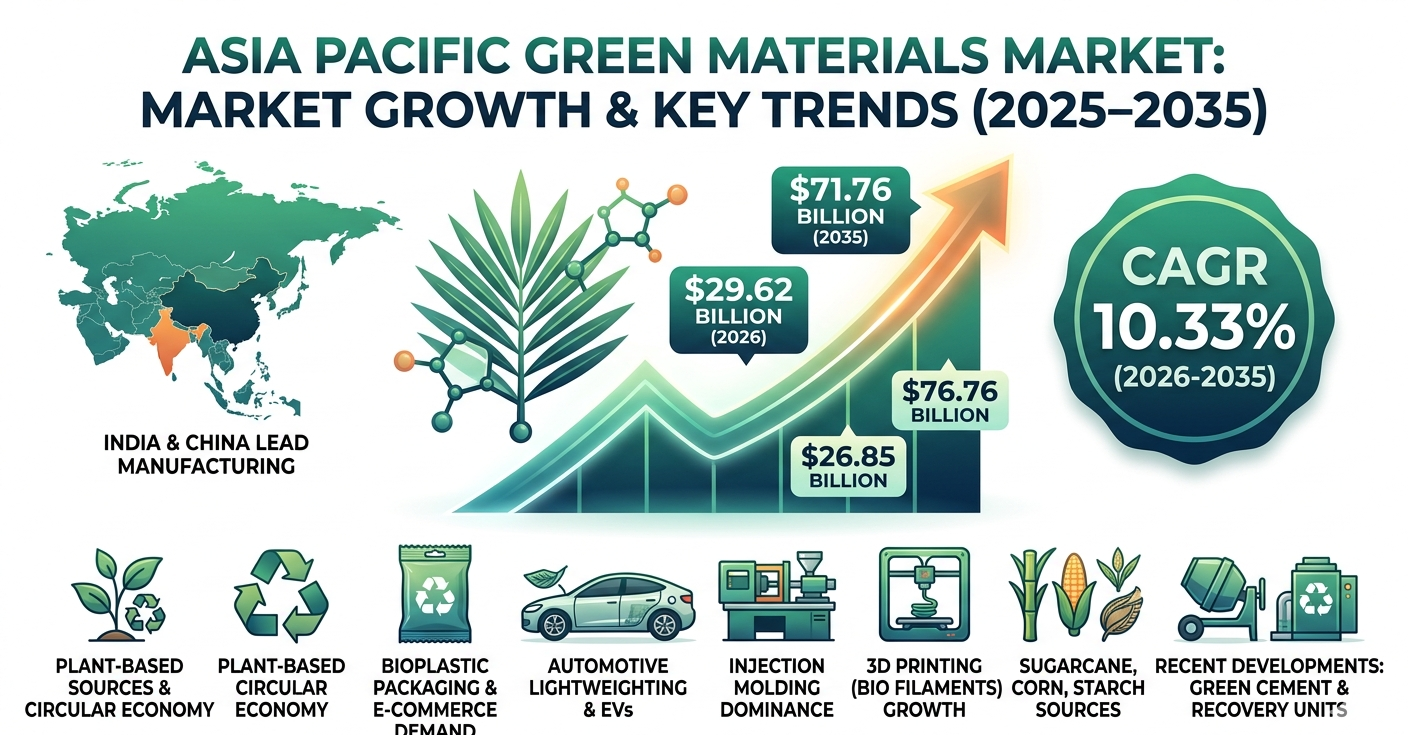
The Asia Pacific green materials market is poised for a decade of transformative growth. Valued at USD 26.85 billion in 2025, the market is estimated to reach USD 29.62 billion in 2026. By 2035, the industry is projected to skyrocket to USD 71.76 billion, maintaining a robust CAGR of 10.33% from 2026 to 2035. This steady climb reflects a deep-rooted structural shift across the region’s industrial landscape.
Market Overview: From Waste to Worth
The Asia Pacific green materials market encompasses a wide array of environmentally responsible solutions—ranging from plant-based bioplastics to recycled composites. These materials are designed to minimize the ecological footprint of industries like packaging, automotive, and electronics.
In this region, “Green Materials” are defined by their ability to reduce carbon emissions and decouple industrial growth from fossil fuel dependence. With a heavy focus on the circular economy, manufacturers are increasingly turning to renewable sources like sugarcane, corn, and agricultural waste to create high-performance alternatives to traditional polymers.
What is Market Growth?
The growth trajectory in Asia Pacific is one of the most aggressive in the global materials sector. Starting from a base of USD 26.85 billion in 2025, the market is expected to more than double in value by 2035.
-
Volume Surge: While value is growing at 10.33%, the physical volume of green materials produced is expected to see an even sharper rise, particularly in East Asia, which is projected to command over 52% of the market volume by 2034.
-
The “India-China” Engine: These two nations are the primary drivers, leveraging their massive manufacturing bases to scale green solutions at a pace that makes them globally competitive.
What are the Key Market Trends?
The market is currently being shaped by two “mega-trends”:
-
The Compostable Packaging Boom: Retailers and food giants across the region are rapidly ditching single-use plastics in favor of bioplastic packaging. This trend is driven by consumer demand for “guilt-free” e-commerce and home delivery services.
-
Automotive Lightweighting: As the region leads the global shift toward Electric Vehicles (EVs), there is an urgent need for materials that reduce vehicle weight to maximize battery range. Bio-composites and natural fibers are increasingly replacing heavier components in dashboards, door panels, and seating.
What are the Market’s Recent Government Initiatives?
Regulation is the primary catalyst in this region. Governments in India, China, and Japan have moved beyond simple environmental targets to providing “hard” economic incentives.
-
Tax Breaks & Subsidies: Many regional governments now offer reduced corporate tax rates for companies that pivot 30% or more of their production to eco-friendly materials.
-
Bans on Single-Use Plastics: Nationwide bans in various Asian countries have created a “forced market” for biodegradable alternatives, ensuring a steady stream of demand for bioplastic manufacturers.
-
Localized Sourcing Support: Initiatives like “Make in India” are encouraging manufacturers to source raw materials like jute and hemp locally, reducing the carbon footprint of the supply chain itself.
What are the Benefits of Using Green Materials?
The move to green materials offers a triple-win for regional stakeholders:
-
Environmental Integrity: Dramatic reduction in landfill waste and lower carbon emissions during production.
-
Supply Chain Resilience: By using localized, plant-based sources (like corn and sugarcane), manufacturers reduce their vulnerability to global oil price fluctuations.
-
Consumer Brand Loyalty: In the modern Asia Pacific market, sustainability is a premium brand attribute. Companies using green materials often see higher engagement and trust from younger demographics.
What are the Key Factors Driving the Market?
The “Sudden Increase” in large-scale industrial adoption is the primary driver. It isn’t just small startups anymore; heavy industries are integrating green materials into their core operations. The availability of renewable raw materials—which are abundant in the tropical and agricultural belts of Southeast and South Asia—allows for cost-effective scaling. Additionally, the rapid advancement in Injection Molding technology has made it easier and cheaper to process green polymers into complex shapes, matching the efficiency of traditional plastic manufacturing.
What is the Future of the Market?
The future of the market lies in Waste-Derived Materials and 3D Printing. By 2035, we expect to see a significant portion of green materials sourced from “upcycled” industrial and agricultural waste, truly closing the loop on production. 3D printing with bio-filaments will likely revolutionize the healthcare and fashion sectors in Asia, allowing for hyper-personalized, zero-waste manufacturing on a local scale.
Why is This Market Important?
This market is critical because Asia Pacific is the world’s manufacturing floor. If the global community is to meet climate targets, the materials used in this region must be sustainable. Furthermore, the market supports regional economics by creating localized employment in the sourcing and processing of natural fibers, turning agricultural byproducts into high-value industrial assets.
Which Segment Accounted for the Largest Market Share?
The Dominance of Bioplastics
The Bioplastic segment led the market in 2025 and is expected to remain the dominant force through 2035. Its success stems from its “drop-in” nature—it can often be used in existing machinery with minimal adjustments, making it the easiest path for companies to reduce their fossil fuel reliance.
Packaging: The End-Use Leader
From an application perspective, Packaging remains the titan of the industry. The explosion of e-commerce in the Asia Pacific has created an insatiable demand for shipping materials. By shifting to biodegradable films and paper-based cushions, the packaging sector has become the largest consumer of green resins and fibers in the region.
Competitive Landscape & Recent Developments
The market features a mix of global chemical leaders and regional powerhouses like Toray Industries, Mitsubishi Chemical, and Reliance Industries.
-
April 2024: Navrattan Group announced plans to launch a high-durability Green Cement in India, aimed at revolutionizing the construction sector.
-
May 2025: A strategic partnership between CleanHub and Green Worms was established to build a massive material recovery unit in India, specifically targeting carbon pollution reduction.
Contact Us https://www.towardschemandmaterials.com/contact-us
About Us
Towards Chem and Materials is a leading global consulting firm specializing in providing comprehensive and strategic research solutions across the chemical and materials industries. With a highly skilled and experienced consultant team, we offer a wide range of services designed to empower businesses with valuable insights and actionable recommendations.
Email: sales@towardschemandmaterials.com
Web: https://www.towardschemandmaterials.com/
For Latest Update Follow Us: https://www.linkedin.com/company/towards-chem-and-materials/?viewAsMember=true




Leave a Reply