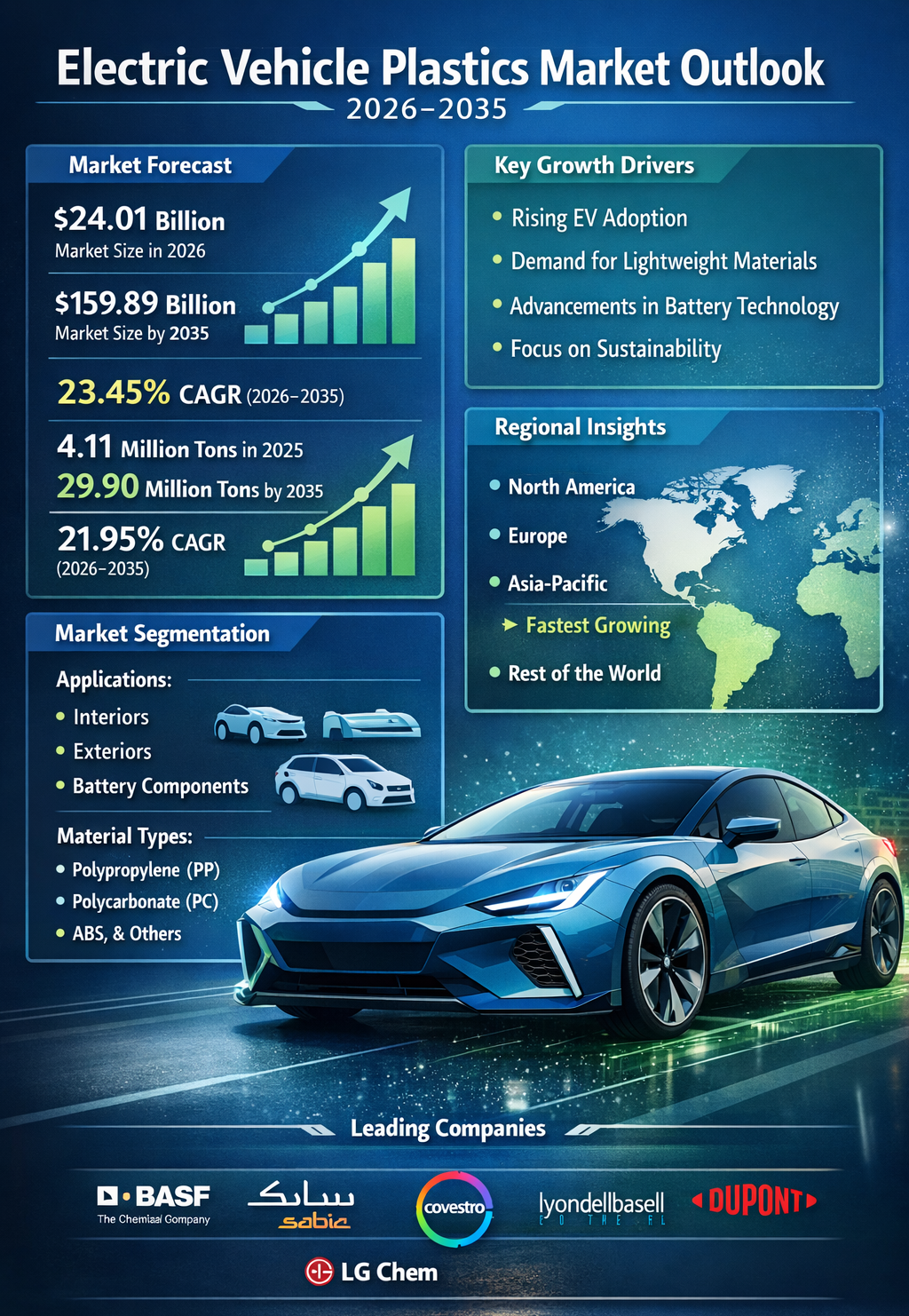
The global Electric Vehicle (EV) plastics market is projected to experience substantial growth, with its size increasing from USD 19.45 billion in 2025 to USD 159.89 billion by 2035. This growth is fueled by a Compound Annual Growth Rate (CAGR) of 23.45% from 2026 to 2035. In terms of volume, the market is set to expand from 4.11 million tons in 2025 to 29.90 million tons by 2035, growing at a CAGR of 21.95% during the same period. This rapid expansion is attributed to the increasing demand for lightweight, durable, and high-performance plastics in electric vehicles, which are essential for improving energy efficiency, range, and safety.
As automakers continue to pivot towards electric vehicle production, the demand for specialized plastics in various vehicle components such as interiors, exteriors, and batteries is on the rise. These plastics offer benefits like weight reduction, improved thermal stability, and corrosion resistance, which are critical for enhancing the performance and lifespan of electric vehicles.
What Are the Key Drivers for Growth in the EV Plastics Market?
The growth of the electric vehicle plastics market can be attributed to several key drivers:
- Growing Electric Vehicle Adoption:
- As more consumers and businesses shift towards electric vehicles to meet environmental goals, the demand for EV-specific components, including high-performance plastics, continues to rise.
- Government incentives, subsidies, and regulations promoting cleaner vehicles further support the adoption of EVs.
- Lightweighting for Enhanced Efficiency:
- Lightweight materials, such as advanced plastics, are critical for reducing vehicle weight, which improves energy efficiency and extends the driving range of electric vehicles. This is particularly crucial in EVs, where range and efficiency are top priorities for consumers.
- Battery Pack and Charging Systems:
- Plastics play a vital role in EV battery packs and charging systems, offering electrical insulation, thermal management, and protection against external factors like moisture and temperature fluctuations. As battery technology continues to advance, the demand for specialized plastics in these systems will grow.
- Sustainability and Recycling Initiatives:
- The push for sustainable automotive manufacturing practices is leading automakers to explore recyclable and eco-friendly plastics, particularly in interior components and non-structural elements of EVs. Innovations in bio-based plastics and recycling processes are contributing to this shift.
- Technological Advancements in Plastics:
- Advances in polymers and composites are allowing for the production of stronger, more heat-resistant plastics that are suitable for demanding EV applications. This includes materials for high-stress areas such as under-the-hood components and battery casings.
Key Segments & Trends in the EV Plastics Market
The electric vehicle plastics market is segmented by application, material type, and region, each of which is evolving as the EV market matures.
By Application:
- Interior Components:
- Plastics are extensively used in interiors, including dashboards, seating, door panels, and trim. These materials provide comfort, durability, and aesthetic appeal while reducing vehicle weight.
- Key trends: The demand for premium interior plastics with enhanced finish and texture, driven by consumer preference for luxury EVs.
- Exterior Components:
- Lightweight plastics such as polypropylene, polyurethane, and thermoplastic elastomers are used in exteriors for body panels, bumpers, and other non-structural components. These materials are chosen for their ability to withstand impacts, UV exposure, and temperature variations.
- Key trends: The growing use of recyclable plastics in body panels and bumpers to support circular economy initiatives.
- Battery Packs:
- Plastics are used in the casings and structural components of EV batteries, where they offer protection, insulation, and thermal management.
- Key trends: Increased use of advanced polymers in battery housing for improved safety and energy efficiency.
- Charging Stations and Components:
- Plastics are integral in EV charging stations for cable management, connectors, and safety insulation. As the EV charging infrastructure grows, so too will the demand for high-performance plastics in these components.
By Material Type:
- Polypropylene (PP):
- PP is the most commonly used plastic in EV manufacturing due to its lightweight, durability, and cost-effectiveness. It is found in exterior panels, bumpers, and interior trims.
- Polycarbonate (PC):
- Known for its transparency and impact resistance, polycarbonate is used in headlights, windows, and battery enclosures, where high durability is required.
- Acrylonitrile Butadiene Styrene (ABS):
- ABS is favored for its strength and heat resistance, used in the manufacturing of interior and exterior parts such as dashboards and trims.
- Thermoplastic Polyurethane (TPU):
- TPU is increasingly used for flexible applications in the interior, providing durability and aesthetic quality for parts like upholstery and flooring.
- Bio-based Plastics:
- The market is seeing a growing trend toward bio-based plastics as part of the automotive industry’s sustainability goals. These plastics, made from renewable resources, are being increasingly used for non-structural components and interior applications.
By Region:
- North America:
- North America is a key region for the EV plastics market, with major automotive manufacturers increasing their production of electric vehicles. The region also has a strong presence of plastic manufacturers innovating for the EV sector.
- Europe:
- Europe is expected to see significant growth, driven by stringent environmental regulations and policies aimed at reducing emissions. Countries like Germany, France, and the UK are spearheading the transition to electric vehicles, thus driving the demand for EV plastics.
- Asia-Pacific:
- Asia-Pacific, particularly China, Japan, and South Korea, is a major player in the electric vehicle market. The presence of leading EV manufacturers such as BYD and Tesla’s increasing investments in Asia make this region crucial for the EV plastics market.
Competitive Landscape
The competitive landscape in the global EV plastics market includes major plastic manufacturers, automotive component suppliers, and material innovators. Key players in the market include:
- BASF:
- BASF is a leading supplier of plastics for automotive applications, including solutions for interior, exterior, and battery pack components in EVs. The company is at the forefront of sustainable plastic innovations.
- DuPont:
- DuPont offers high-performance polymers for EV applications, focusing on materials that ensure safety, durability, and sustainability, especially for battery enclosures and interior components.
- SABIC:
- SABIC, a global leader in chemical manufacturing, is providing advanced plastics for electric vehicle production, with a focus on weight reduction, safety, and sustainability.
- Covestro:
- Covestro specializes in polycarbonate and polyurethane materials, offering lightweight solutions for EVs that enhance fuel efficiency and driving range while maintaining high standards of safety.
These companies are making strategic investments in R&D and forming partnerships with automakers to provide customized plastic solutions that meet the unique demands of electric vehicles.
Challenges and Barriers to Market Growth
- High Material Costs:
- The cost of advanced plastics, especially bio-based and high-performance materials, can be higher than traditional plastics, impacting the overall cost structure of electric vehicles.
- Technological Barriers:
- While the adoption of innovative plastics is increasing, the full potential of new materials, such as bio-based plastics, is yet to be realized. Scaling production and ensuring consistent performance remain challenges.
- Supply Chain Constraints:
- The supply chain for specialized EV plastics is still developing, which can limit the availability of materials and add complexity to the production process.
Conclusion: Future Outlook
The electric vehicle plastics market is poised for robust growth over the next decade, driven by the increasing adoption of electric vehicles, technological advancements in plastics, and regulatory support for greener automotive solutions. As the global EV industry continues to expand, plastics will play a critical role in enhancing vehicle performance, sustainability, and efficiency.
By 2035, the market is expected to reach USD 159.89 billion, with significant opportunities in advanced polymers, lightweight materials, and eco-friendly plastics. Companies that focus on sustainability, innovation, and strategic partnerships will lead the charge in this rapidly evolving market.
| Year | Market Size (USD Billion) | Market Volume (Million Tons) |
|---|---|---|
| 2025 | 19.45 | 4.11 |
| 2026 | 24.01 | 5.20 |
| 2027 | 30.50 | 6.60 |
| 2028 | 38.20 | 8.00 |
| 2029 | 47.75 | 9.50 |
| 2030 | 59.70 | 11.50 |
| 2031 | 73.15 | 14.20 |
| 2032 | 91.00 | 17.00 |
| 2033 | 115.50 | 22.00 |
| 2034 | 142.30 | 26.50 |
| 2035 | 159.89 | 29.90 |
Contact Us https://www.towardschemandmaterials.com/contact-us
About Us
Towards Chem and Materials is a leading global consulting firm specializing in providing comprehensive and strategic research solutions across the chemical and materials industries. With a highly skilled and experienced consultant team, we offer a wide range of services designed to empower businesses with valuable insights and actionable recommendations.
Email: [email protected]
Web: https://www.towardschemandmaterials.com/
For Latest Update Follow Us: https://www.linkedin.com/company/towards-chem-and-materials/?viewAsMember=true


Leave a Reply