Executive Summary
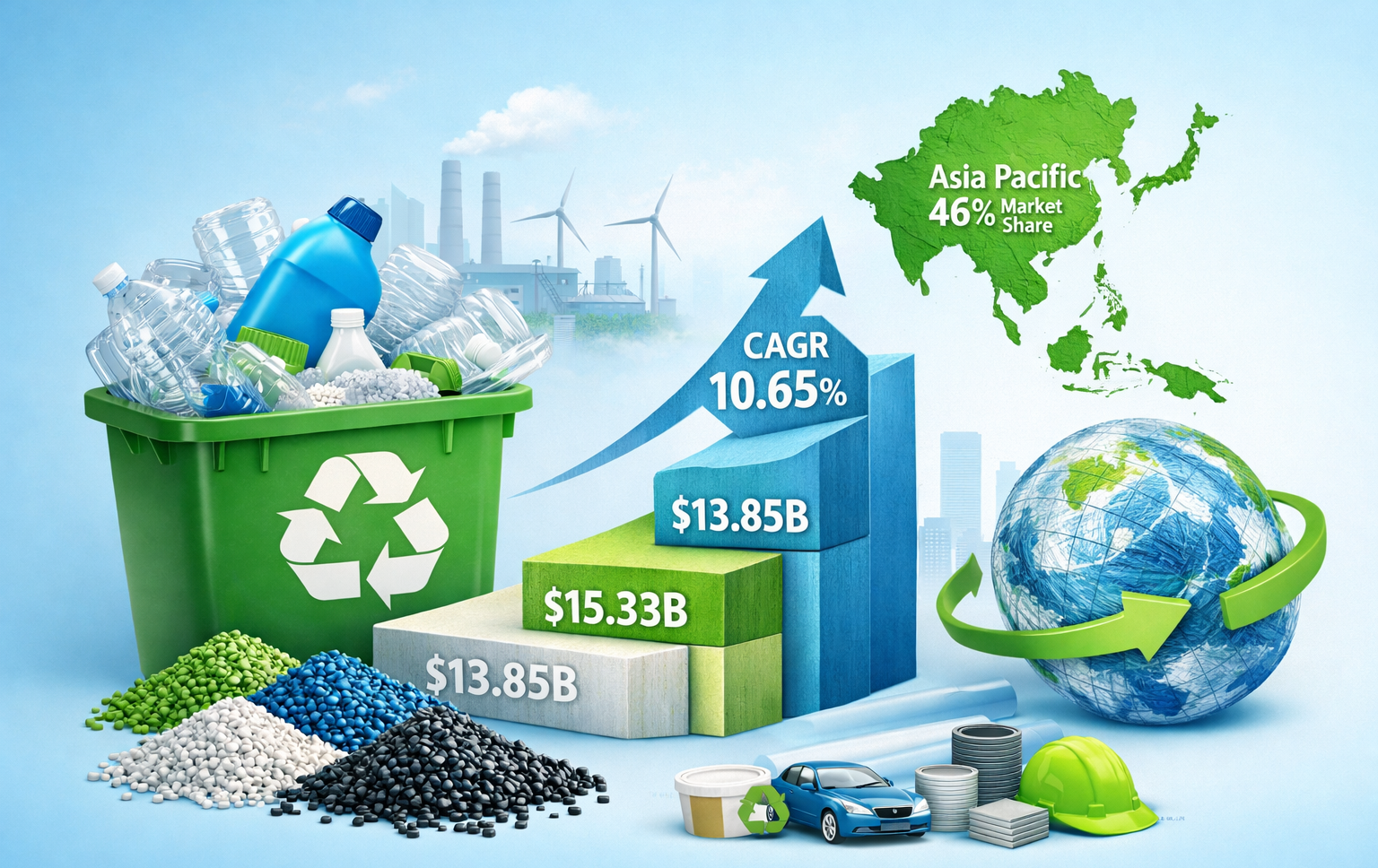
The global post-consumer recycled plastics market was valued at USD 13.85 billion in 2025 and is projected to grow significantly, reaching USD 38.10 billion by 2035, reflecting a strong compound annual growth rate (CAGR) of 10.65% from 2026 to 2035. The growing emphasis on sustainable waste management practices, combined with increasing consumer and regulatory pressures for recycling, is fueling demand for recycled plastics. The Asia Pacific region, with its robust manufacturing sector and increasing environmental awareness, dominated the market with a revenue share of 46% in 2025. This report provides a comprehensive analysis of the market’s drivers, segments, trends, and future outlook.
What Are Post-Consumer Recycled Plastics?
Post-consumer recycled plastics (PCR plastics) refer to plastic products that have been used by consumers and subsequently recycled into new materials, reducing the need for virgin plastic production. The recycling process involves collecting, cleaning, and processing waste plastic materials, turning them into new products used across various industries. The rise in recycling initiatives has played a pivotal role in reducing the environmental impact of plastic waste.
PCR plastics are essential in industries such as packaging, automotive, construction, and textiles, contributing significantly to the shift towards circular economies.
What Are the Primary Drivers for the Post-Consumer Recycled Plastics Market?
1. Growing Focus on Sustainability and Circular Economy
The global drive toward sustainability and reducing plastic waste is one of the most significant factors driving the post-consumer recycled plastics market. Governments worldwide are increasingly setting targets for recycling rates and reducing landfill usage, providing incentives for industries to adopt PCR materials. Circular economy initiatives aim to maximize the reuse and recycling of materials, reducing the consumption of virgin resources and minimizing environmental pollution.
2. Regulatory Pressures and Policies
Stricter environmental regulations and policies, such as the European Union’s Circular Economy Action Plan and plastic waste management regulations, are pushing industries to adopt post-consumer recycled plastics. These regulations mandate increased recycling and waste reduction, promoting the use of PCR plastics across industries.
3. Consumer Demand for Sustainable Products
As environmental awareness grows, consumers are increasingly seeking sustainable products. Packaging manufacturers, particularly in the food and beverage sector, are under pressure to use PCR plastics to meet consumer demands for eco-friendly packaging. Companies are responding by introducing products made with recycled materials, further driving market demand.
4. Economic Benefits of Recycled Plastics
Recycling plastic materials reduces the need for raw material extraction and manufacturing, offering cost advantages over producing virgin plastics. The economic feasibility of using recycled plastics, coupled with advancements in recycling technologies, has made PCR plastics an attractive option for many industries.
Key Segments & Trends in the Post-Consumer Recycled Plastics Market
By Material Type
- Polyethylene Terephthalate (PET)
- PET is one of the most commonly recycled plastics, particularly in the beverage and packaging industries. Its recycling process is well-established, making it a significant contributor to the PCR plastics market.
- Polyethylene (PE)
- PE is another major material used in the production of post-consumer recycled plastics. It is widely used in packaging materials such as plastic bags, bottles, and films, with growing recycling rates.
- Polypropylene (PP)
- PP’s recycling rate is increasing, with applications in packaging, automotive, and consumer products. The material’s ability to be recycled into various new products contributes to the expansion of the market.
- Polyvinyl Chloride (PVC)
- While less commonly recycled compared to PET or PE, PVC is used in construction and medical applications. Efforts to enhance PVC recycling are driving its increasing contribution to the PCR plastics market.
- Other Plastics
- Includes materials such as polystyrene (PS), acrylonitrile butadiene styrene (ABS), and others that are recycled for use in niche applications, including electronics and automotive industries.
By Application
- Packaging
- The packaging industry is the largest consumer of post-consumer recycled plastics, with packaging materials like bottles, containers, and films being primarily made from recycled plastics. With increased consumer and regulatory pressure for sustainability, the demand for PCR plastics in packaging is expected to grow significantly.
- Automotive
- Recycled plastics are increasingly being used in the automotive industry for manufacturing parts such as dashboards, bumpers, and insulation materials. The push towards lightweight and sustainable vehicles is a key driver for this application segment.
- Construction
- The construction industry uses recycled plastics in a variety of ways, from piping and flooring to insulation materials. The increased use of recycled materials in construction supports the circular economy and reduces the carbon footprint of the sector.
- Textiles
- Recycled plastics are being used in the textile industry to produce fabric fibers for clothing and upholstery. PET is the primary material used for this purpose, especially in the production of recycled polyester fabrics.
- Others
- Includes electronics, consumer goods, and other niche applications where recycled plastics are used to create sustainable products.
By Region
- Asia Pacific
- Asia Pacific dominated the market with a 46% share in 2025, driven by large-scale manufacturing and growing recycling infrastructure. China and India are major contributors to the regional demand for PCR plastics in packaging, automotive, and construction.
- North America
- North America is expected to see steady growth in the post-consumer recycled plastics market, primarily driven by the strong demand from the packaging and automotive sectors. Regulatory pressures and consumer demand for sustainable packaging solutions are key drivers for growth.
- Europe
- Europe remains one of the leading regions for recycled plastics adoption, driven by stringent recycling regulations and the push towards a circular economy. The European Union’s Green Deal and its waste management targets are key factors accelerating the demand for PCR plastics in the region.
- Latin America and Middle East & Africa
- These regions are expected to witness moderate growth, with efforts to improve recycling infrastructure and increase the use of PCR plastics in various industries.
Emerging Technological Shifts in the Post-Consumer Recycled Plastics Market
Technological advancements in recycling processes are crucial to improving the efficiency and quality of post-consumer recycled plastics. Some of the notable trends include:
- Advanced Sorting and Processing Technologies: New sorting and processing technologies, such as optical sorting and chemical recycling, are making it easier to separate and process different types of plastics, improving the quality of recycled materials.
- Chemical Recycling: This process involves breaking down plastic waste into its monomers or basic chemicals, which can be used to create new plastics. Chemical recycling is seen as a solution to address challenges in recycling mixed plastics.
- Closed-Loop Recycling: Closed-loop recycling, where post-consumer recycled plastics are used to make the same type of product (e.g., beverage bottles made from recycled PET), is becoming more prevalent, ensuring the continuous reuse of materials.
Competitive Landscape
The post-consumer recycled plastics market is highly competitive, with key players focusing on expanding their recycling capacities, enhancing technologies, and diversifying product offerings. Key players include:
- Veolia Environment S.A.: A global leader in waste management and recycling, Veolia focuses on developing advanced recycling technologies and expanding its post-consumer recycled plastics portfolio.
- SUEZ Recycling & Recovery: Known for its efforts in plastic waste management and recycling, SUEZ continues to innovate with sustainable plastic solutions and expand its market share.
- Indorama Ventures Public Company Limited: Indorama is a major player in the recycling of PET plastics and has been investing heavily in expanding its recycling capabilities and increasing PCR production.
- Coca-Cola: As a significant user of post-consumer recycled plastics in its packaging, Coca-Cola has committed to increasing its use of recycled materials, leading the charge toward more sustainable packaging.
- Nestlé: Nestlé is actively involved in reducing its plastic footprint and increasing the use of recycled plastics in its product packaging, contributing to the global market shift.
What Does the Future Hold for the Post-Consumer Recycled Plastics Market?
The future of the post-consumer recycled plastics market is promising, with rapid growth projected over the next decade. Innovations in recycling technologies, increasing consumer demand for sustainable products, and regulatory changes are expected to drive market expansion. As companies continue to adopt circular economy practices, post-consumer recycled plastics will play a crucial role in reducing environmental impact and contributing to global sustainability goals.
Conclusion
The post-consumer recycled plastics market is set for substantial growth, with a CAGR of 10.65% from 2026 to 2035. The increasing regulatory push for recycling, combined with advancements in recycling technologies and growing consumer demand for sustainable products, will continue to shape the market’s future. Asia Pacific’s dominance, along with strong growth prospects in North America and Europe, signals a thriving global market that presents opportunities for businesses focused on innovation and sustainability.
About Us
Towards Chemical and Materials is a leading global consulting firm specializing in providing comprehensive and strategic research solutions across the chemical and materials industries. With a highly skilled and experienced consultant team, we offer a wide range of services designed to empower businesses with valuable insights and actionable recommendations.
Our Trusted Data Partners
Precedence Research | Statifacts | Towards Packaging | Towards Healthcare | Towards Food and Beverages | Towards Chemical and Materials | Towards Consumer Goods | Nova One Advisor |
For Latest Update Follow Us: https://www.linkedin.com/company/towards-chem-and-materials/
USA: +1 804 441 9344
APAC: +61 485 981 310 or +91 87933 22019
Europe: +44 7383 092 044
Email: [email protected]


Leave a Reply