The global green hydrogen market is poised for explosive growth, driven by an increasing global push toward sustainable energy solutions and carbon neutrality. Valued at USD 12.85 billion in 2025, the market is set to expand rapidly, reaching USD 17.82 billion by 2026. By 2035, it is projected to hit an astounding USD 337.37 billion. This represents a compound annual growth rate (CAGR) of 38.65% from 2026 to 2035. The green hydrogen market’s growth is directly tied to its increasing adoption as an alternative to conventional fossil fuels, especially in sectors like transportation, industry, and power generation.
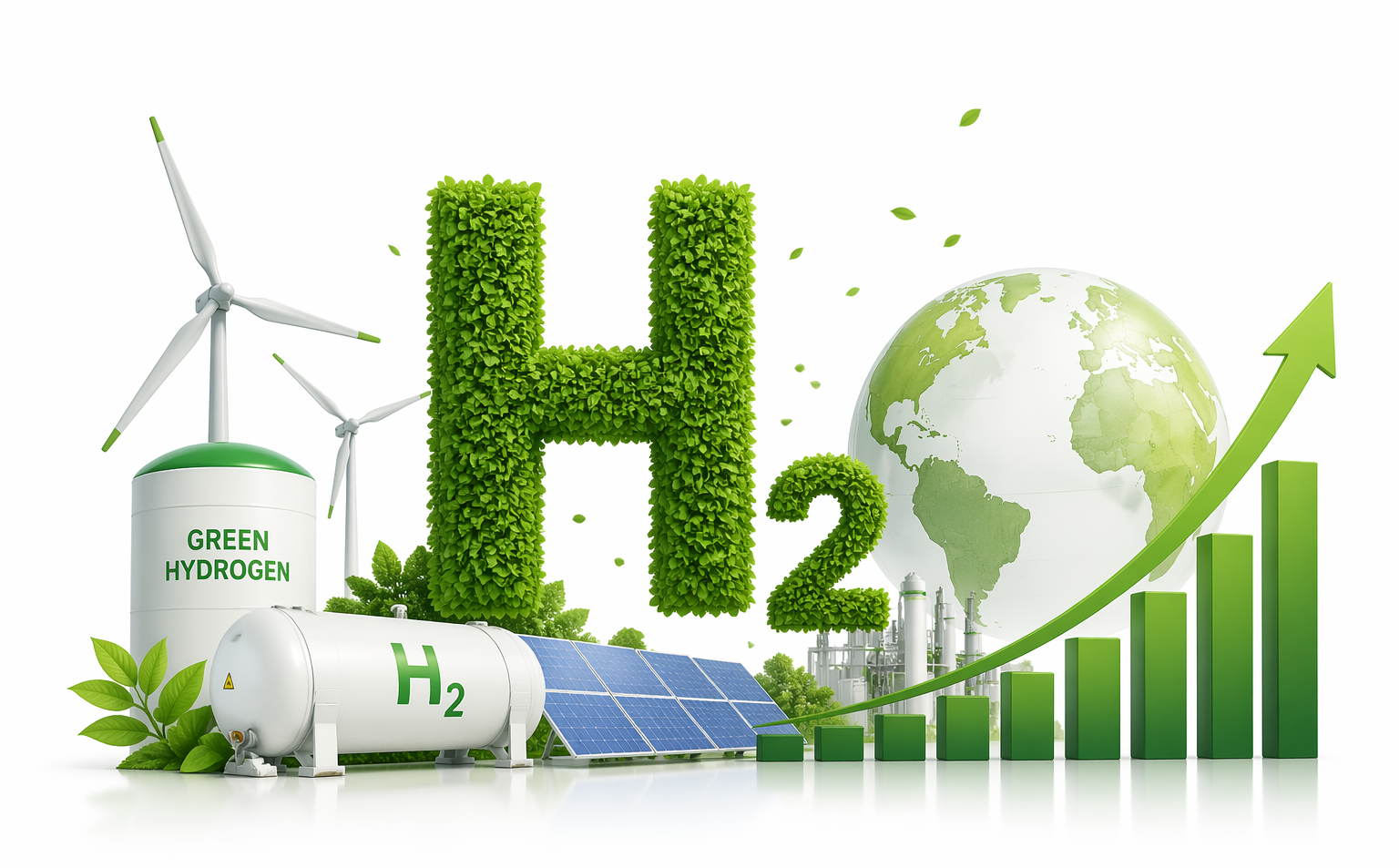
Green hydrogen is produced using renewable energy sources, primarily wind, solar, and hydroelectric power, making it a clean and sustainable energy carrier. Its production process involves electrolysis, where electricity is used to split water into hydrogen and oxygen. This hydrogen can then be used for various applications, contributing significantly to decarbonizing sectors that are traditionally hard to electrify, such as heavy industry and transportation.
Key Takeaways
- By region, Europe dominated the green hydrogen market with 33% share in 2025.
- By region, Asia Pacific held the 29% market share in 2025 and is anticipated to have the fastest growth with a CAGR of 40.5% during the forecast period.
- By technology, the alkaline electrolysis segment dominated the market with 48% share in 2025.
- By technology, the PEM electrolysis segment held the 32% market share in 2025 and expects the fastest CAGR of 41.5% during the forecast period.
- By energy source, the solar energy segment dominated the market with 42% share in 2025.
- By energy source, the wind energy segment held the 33% market share in 2025 and expects the fastest CAGR of 39.2% during the forecast period.
- By application, the ammonia production segment dominated the market with 36% share in 2025.
- By application, the transportation segment held the 18% market share in 2025 and expects the fastest CAGR of 42.3% during the forecast period.
- By end-use industry, the chemicals segment dominated the market with 34% share in 2025.
- By end-use industry, the energy and utilities segment held the 20% market share in 2025 and expects the fastest CAGR of 39.6% during the forecast period.
- By distribution channel, the on-site generation segment dominated the market with 46% share in 2025 and expects the fastest CAGR of 38.7% during the forecast period.
Market Size and Volume Forecast
- Market Estimated Size (2026): USD 17.82 Billion | CAGR (2026–2035): 36.95%
- Market Projected Size (2035): USD 17.82 Billion
- Market Volume (2025): 1.95 Million Tons (MT) | Volume CAGR (2026–2035): 36.95%
- Market Projected Volume (2035): 45.25 Million Tons (MT)
- Market Pricing (2025):
- Average Manufacturing Price: USD 3.25/kg
- Average Selling Price: USD 5.33/kg
- Pricing CAGR (2025–2035): -8.9%
Market Growth
Green hydrogen’s growth trajectory reflects its pivotal role in the global transition to net-zero emissions. From 1.95 million tons in 2025, the market’s volume is expected to surge to 45.25 million tons by 2035, reflecting a CAGR of 36.95%. This shift will be driven by the increasing demand for clean energy solutions, particularly in high-emission industries. The pace of growth is also supported by advancements in electrolyzer technology, lower production costs, and supportive government policies that encourage clean energy investments.
The market’s expansion is fueled by growing awareness of the environmental impact of traditional hydrogen production methods, known as gray hydrogen, which relies on fossil fuels. Green hydrogen, by contrast, offers a sustainable alternative that can support decarbonization across numerous sectors.
Key Market Trends
- Technological Advancements: The continuous development of more efficient electrolyzers is a critical trend in green hydrogen production. As technology advances, the cost of production decreases, making green hydrogen more competitive with conventional fuels.
- Energy Storage Solutions: Green hydrogen offers a promising solution for energy storage. It can be stored for long periods and used as a backup for intermittent renewable energy sources, such as solar and wind.
- Integration with Renewable Energy: Green hydrogen is increasingly seen as an ideal complement to renewable energy sources. Excess renewable energy can be used for hydrogen production, creating a symbiotic relationship between clean energy and hydrogen production.
- Scaling of Production Facilities: Large-scale green hydrogen production plants are being developed worldwide to meet growing demand. These plants are expected to benefit from economies of scale, reducing the cost of hydrogen production and increasing market accessibility.
- Collaborations and Partnerships: Industry players are forming strategic partnerships to accelerate the development and commercialization of green hydrogen technologies. These collaborations are essential to address infrastructure challenges and expand the market’s reach.
Recent Government Initiatives
Governments across the globe are taking substantial steps to support the green hydrogen market through favorable policies and incentives. Notably:
- European Union: The EU has announced significant investments under its “Hydrogen Strategy for a Climate-Neutral Europe” to make green hydrogen a central component of its clean energy transition. With funding of up to EUR 470 billion, the EU aims to produce 10 million tons of renewable hydrogen annually by 2030.
- United States: The U.S. government’s Hydrogen Shot initiative, part of the Clean Energy Future Plan, aims to reduce the cost of green hydrogen to USD 1 per kilogram within a decade, enhancing its affordability and scalability.
- Japan: Japan has been a pioneer in hydrogen energy and is focused on scaling its hydrogen infrastructure through government-backed projects, making hydrogen a cornerstone of its decarbonization goals.
These government-led initiatives are crucial to accelerating the market’s growth and addressing the economic and technical challenges associated with green hydrogen production and distribution.
Benefits of Using Green Hydrogen
Green hydrogen offers several compelling advantages, particularly in reducing carbon emissions and enhancing energy security:
- Zero-Emission Energy Source: As green hydrogen is produced using renewable energy, it contributes to reducing greenhouse gas emissions and is a key solution for achieving carbon neutrality goals.
- Versatile Application: Green hydrogen can be used in a wide range of applications, from powering heavy industries and transportation to generating electricity and serving as an energy storage medium.
- Enhanced Energy Security: By diversifying energy sources, green hydrogen enhances energy security and reduces dependence on fossil fuel imports, fostering greater energy independence.
- Boosting Clean Industry: Green hydrogen is critical for industries that are difficult to electrify, such as steel and cement manufacturing, offering a way to decarbonize their processes without compromising productivity.
Key Factors Driving the Market
- Government Policies and Funding: Governments around the world are committing substantial resources to fund hydrogen projects and provide incentives, thus lowering the financial barriers to market entry.
- Environmental Sustainability: As the world focuses on sustainability, the need to transition from fossil fuels to cleaner alternatives like green hydrogen has never been more urgent.
- Corporate Investments: Major industrial players are increasingly investing in green hydrogen technology, recognizing its potential to reshape energy markets and meet sustainability targets.
- Technological Advancements: Advances in electrolysis technology and fuel cell innovation are making green hydrogen more efficient and cost-effective, helping drive market adoption.
- Industrial Decarbonization: Sectors such as steel, chemicals, and heavy transport are key drivers for green hydrogen adoption as they strive to decarbonize their operations.
The Future of the Green Hydrogen Market
Looking ahead, the future of the green hydrogen market appears incredibly promising. The global push toward decarbonization, supported by ambitious climate targets, will drive the need for scalable and cost-effective green hydrogen solutions. As technology advances and production costs decrease, green hydrogen will become a more viable alternative to fossil fuels, unlocking new opportunities across industries. By 2035, it is anticipated that green hydrogen will be central to the global energy transition, contributing significantly to the achievement of net-zero emission goals.
The market will continue to evolve, with innovations in hydrogen storage, transportation, and distribution expected to further facilitate widespread adoption.
Why Is Green Hydrogen Market Important?
The green hydrogen market is crucial for achieving global climate goals and ensuring energy sustainability. As a clean and renewable energy carrier, it offers a transformative solution for industries and sectors that are hard to electrify. It can replace fossil fuels in transportation, manufacturing, and power generation, thus contributing significantly to reducing global carbon emissions. Furthermore, green hydrogen plays a key role in diversifying energy sources, improving energy security, and creating new job opportunities in the renewable energy sector.
Key Companies in the Green Hydrogen Market
Some of the leading companies driving the green hydrogen market include:
- Nel ASA: A global leader in hydrogen production and storage solutions, Nel ASA is at the forefront of producing electrolyzers and hydrogen fueling stations.
- Air Products and Chemicals, Inc.: Known for its involvement in hydrogen production and fuel cell technologies, Air Products is a key player in the green hydrogen space.
- Siemens Energy: Siemens is investing heavily in green hydrogen technologies, including electrolyzers, and is involved in numerous large-scale hydrogen projects.
- ITM Power: A leading manufacturer of electrolyzers, ITM Power is helping to reduce the cost of green hydrogen production and expand its commercial viability.
- Plug Power: Specializing in hydrogen fuel cell systems, Plug Power is a significant player in the green hydrogen market with a focus on decarbonizing logistics and transportation.
Which Segment Accounted for the Largest Market Share?
The production segment is expected to account for the largest share of the green hydrogen market. This segment includes the manufacturing of hydrogen through electrolysis using renewable energy sources. As demand for green hydrogen increases, the need for efficient and cost-effective electrolyzers and production facilities will grow. Companies are scaling up production capacity to meet the rising demand across various sectors, including transportation, industry, and energy generation.
About Us
Towards Chemical and Materials is a leading global consulting firm specializing in providing comprehensive and strategic research solutions across the chemical and materials industries. With a highly skilled and experienced consultant team, we offer a wide range of services designed to empower businesses with valuable insights and actionable recommendations.
Our Trusted Data Partners
Precedence Research | Statifacts | Towards Packaging | Towards Healthcare | Towards Food and Beverages | Towards Chemical and Materials | Towards Consumer Goods | Nova One Advisor |
For Latest Update Follow Us: https://www.linkedin.com/company/towards-chem-and-materials/
USA: +1 804 441 9344
APAC: +61 485 981 310 or +91 87933 22019
Europe: +44 7383 092 044
Email: [email protected]


Leave a Reply