Market Overview
The U.S. polyamide market, valued at USD 9.85 billion in 2025, is expected to grow steadily, reaching approximately USD 17.56 billion by 2035. The market is projected to expand at a compound annual growth rate (CAGR) of 5.95% from 2026 to 2035. Polyamide, commonly known as nylon, is a group of synthetic polymers with various applications across multiple industries, including automotive, textiles, electronics, and industrial manufacturing. The market’s growth is driven by the increasing demand for lightweight materials, particularly in the automotive and textile industries, as well as advancements in manufacturing processes.
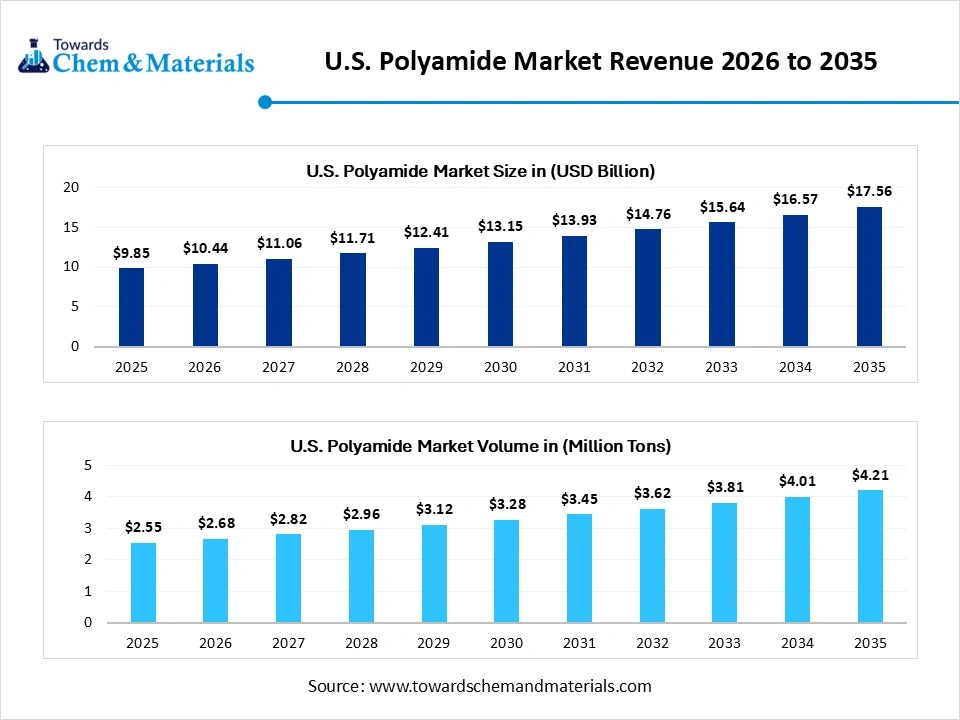
In terms of volume, the U.S. polyamide market is set to experience growth from 2.55 million tons in 2025 to an expected 4.21 million tons by 2035, reflecting a CAGR of 5.15%. The growing adoption of polyamide products in various sectors and a rise in sustainability efforts also play a critical role in the market’s expansion.
Key Market Trends
- Technological Advancements: The development of bio-based polyamides and enhanced manufacturing processes is a significant trend in the U.S. market. Companies are focusing on creating more sustainable alternatives to traditional petroleum-based polyamides, which are seeing increased adoption in industries looking to reduce their carbon footprint.
- Automotive Sector Demand: Polyamides are increasingly used in automotive manufacturing for components such as engine parts, fuel systems, and electrical connectors due to their lightweight, heat resistance, and durability. The push towards electric vehicles (EVs) and stricter regulations regarding vehicle emissions further stimulate the demand for high-performance materials like polyamide.
- Textile and Fashion Industry: Polyamide’s usage in fabrics, particularly in activewear, is growing due to its flexibility, strength, and moisture-wicking properties. The fashion and sportswear industries’ rising demand for durable and high-performance textiles boosts the market.
- Sustainability Focus: There is a growing emphasis on the recycling of polyamide products. Advances in recycling technologies and increased demand for eco-friendly materials are encouraging manufacturers to explore closed-loop recycling systems.
Market Benefits of Using Polyamide
- Durability: Polyamide offers high resistance to abrasion, wear, and tear, making it suitable for harsh environments.
- Versatility: It can be used in a wide range of applications, including automotive, industrial, electrical, and textile products.
- Lightweight Properties: Polyamide is lighter than metals, making it ideal for industries looking to reduce product weight without compromising on strength.
- Temperature Resistance: It can withstand high temperatures, which is particularly beneficial in the automotive and aerospace sectors.
Key Factors Driving the Market
- Automotive Industry Growth: The demand for lightweight and durable components in the automotive industry continues to increase. As automotive manufacturers shift towards electric vehicles, polyamide’s role in lightweighting becomes even more prominent.
- Sustainability Initiatives: Growing environmental concerns and government regulations around sustainability are encouraging the development and use of bio-based and recyclable polyamide materials.
- Rising Demand in Electronics and Electricals: Polyamide’s electrical insulation properties are contributing to its growing use in the electronics sector, particularly in connectors, wire coatings, and circuit boards.
- Textile and Fashion Industry: The increasing consumer preference for activewear and durable fashion items contributes to polyamide’s continued dominance in the textile industry.
Market Recent Government Initiatives
Governments are actively supporting the polyamide market through policies promoting sustainable practices. The U.S. government has introduced initiatives to support the development of bio-based polyamides, reducing dependence on fossil fuels and lowering carbon footprints. Additionally, various tax incentives and grants for manufacturers focused on sustainability are likely to accelerate innovation in the polyamide industry.
Market Growth Outlook
The U.S. polyamide market is poised for significant growth in the coming decade. The market’s expansion is fueled by technological advancements, increasing demand from the automotive and textile sectors, and growing investments in sustainability. The ongoing focus on improving production efficiency, reducing environmental impact, and meeting stringent regulatory standards will continue to propel the market forward.
Pricing Metrics and Trends
- Average Manufacturing Price (2025): USD 2.25/kg
- Average Selling Price (2025): USD 2.95/kg
- Pricing CAGR (2025–2035): 3.6%
Pricing trends indicate a steady increase over the forecast period, driven by growing demand for high-performance polyamide and advancements in production technologies that enhance material properties.
Segment Breakdown and Largest Market Share
The automotive sector is expected to account for the largest share of the U.S. polyamide market. Polyamide’s application in automotive components like engine parts, fuel systems, and electrical connectors, driven by the push for electric vehicles (EVs) and sustainability efforts, positions the automotive sector as the leading driver of market growth.
Key Companies in the Market
Some of the key players in the U.S. polyamide market include:
- BASF SE: A leader in the global chemical industry, BASF is investing heavily in sustainable polyamide production processes.
- DSM Engineering Plastics: Known for its high-performance polyamide products, DSM is expanding its portfolio in line with the growing demand for lightweight and durable materials.
- Lanxess: A major player in the chemical industry, Lanxess offers a wide range of polyamide products, including bio-based alternatives.
Market Future Outlook
The future of the U.S. polyamide market is characterized by steady growth driven by advancements in material science, increasing demand for lightweight and durable products, and a growing emphasis on sustainability. Innovations in recycling technology, bio-based polyamides, and improved manufacturing techniques will continue to drive growth, while the automotive and textile industries will remain key segments of the market.
Market Recent Developments by Major Companies
- BASF has announced new investments in bio-based polyamide production facilities, contributing to the growing demand for eco-friendly materials.
- DSM Engineering Plastics is expanding its polyamide production capacity, particularly in Asia, to meet the growing demand from automotive and electronics sectors.
- Lanxess has introduced new high-performance polyamide grades for automotive and industrial applications, focusing on sustainability and performance.
Conclusion and Future Perspective
The U.S. polyamide market is experiencing robust growth, driven by increased demand from automotive, textiles, electronics, and sustainability initiatives. The ongoing innovations in production technology, recycling, and bio-based materials are expected to shape the future of the industry. As manufacturers align with environmental goals and consumers demand more sustainable solutions, polyamide’s role in various industries is set to expand, ensuring continued market growth well into the next decade.
About Us
Towards Chem and Materials is a leading global consulting firm specializing in providing comprehensive and strategic research solutions across the chemical and materials industries. With a highly skilled and experienced consultant team, we offer a wide range of services designed to empower businesses with valuable insights and actionable recommendations.
Email: [email protected]
Web: https://www.towardschemandmaterials.com/
For Latest Update Follow Us: https://www.linkedin.com/company/towards-chem-and-materials/?viewAsMember=true


Leave a Reply