Market Overview
The global nonwoven fabrics market, valued at USD 53.19 billion in 2025, is set for steady growth in the coming decade. By 2035, the market is projected to reach USD 104.14 billion, demonstrating an impressive CAGR of 6.95% from 2026 to 2035. This growth reflects the increasing demand for nonwoven fabrics across various industries, including healthcare, automotive, hygiene, and construction. As nonwoven fabrics offer advantages like versatility, durability, and cost-effectiveness, their use is expected to expand significantly in these sectors.
Nonwoven fabrics are made by bonding fibers together through various processes like mechanical, thermal, or chemical treatments, eliminating the need for weaving or knitting. The shift towards nonwoven fabrics is being driven by their superior properties and ability to cater to a wide array of applications.
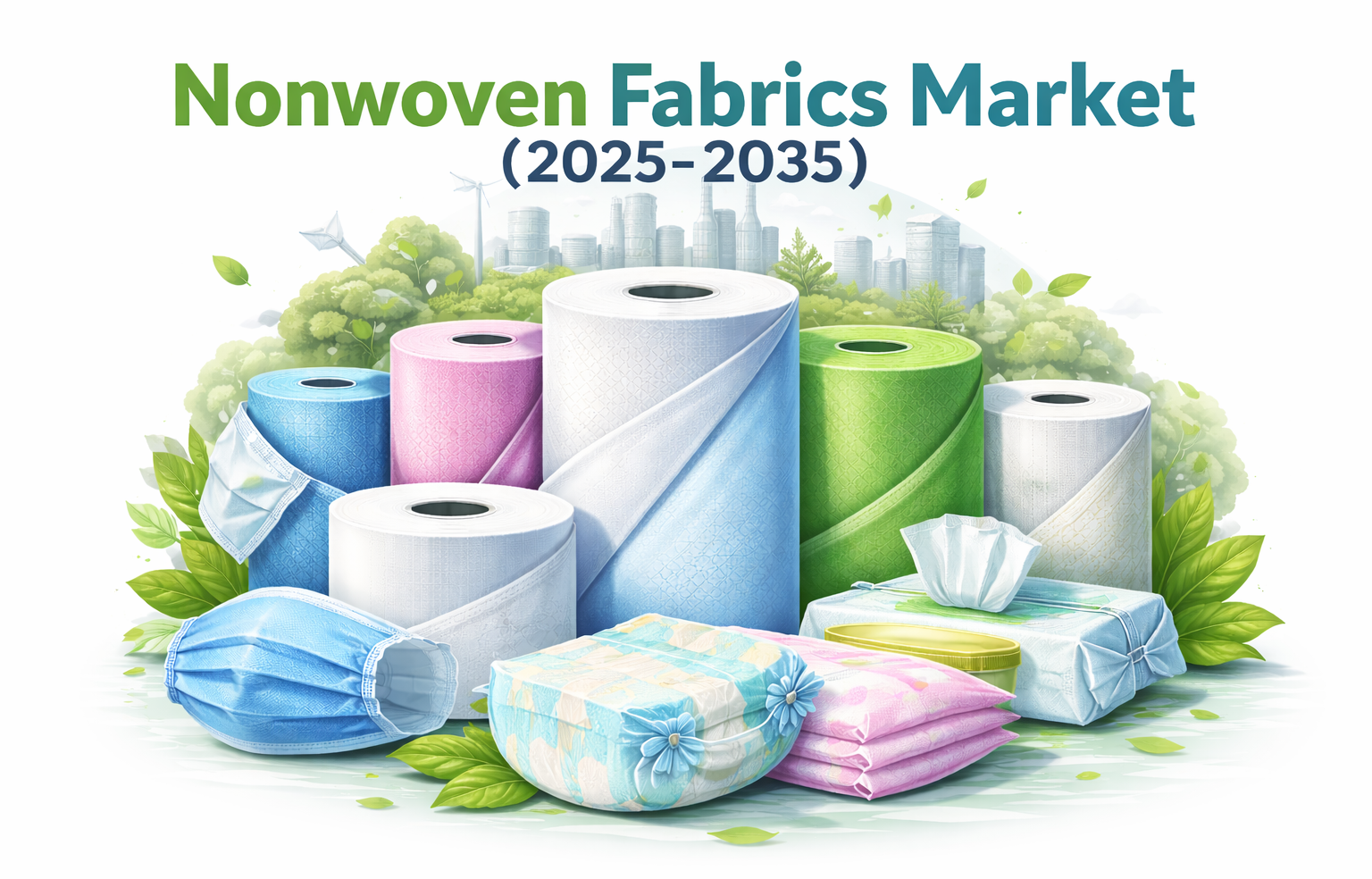
What is Market Growth?
The nonwoven fabrics market is projected to grow at a steady pace, with a CAGR of 6.95% from 2026 to 2035. By 2026, the market will reach an estimated USD 56.89 billion and continue expanding to USD 104.14 billion by 2035. The market’s volume will also experience substantial growth, rising from 16.25 million tons in 2025 to 28.69 million tons by 2035, marking a CAGR of 5.85%. This growth is fueled by the increasing adoption of nonwoven fabrics in various high-demand industries due to their functionality and efficiency.
Key Takeaways
- Asia Pacific dominated the nonwoven fabrics market with the largest revenue share of 42% in 2025.
- By product, the disposables segment led the market with the largest revenue share of 65% in 2025.
- By material, the polypropylene segment led the market with the largest revenue share of 46% in 2025.
- By technology, the spun laid segment led the market with the largest revenue share of 49% in 2025.
- By application, the medical and hygiene segment led the market with the largest revenue share of 48% in 2025.
What Are the Key Market Trends?
Several trends are shaping the nonwoven fabrics market:
- Sustainability Focus: Nonwoven fabrics are increasingly being produced using sustainable materials, such as biodegradable fibers and recycled plastics. As environmental concerns grow, companies are adopting eco-friendly production methods.
- Healthcare Industry Growth: Nonwoven fabrics are widely used in medical and hygiene products, such as surgical gowns, face masks, and diapers. The rising global healthcare demand and increased awareness of hygiene are boosting the demand for these fabrics.
- Innovative Production Technologies: Manufacturers are investing in advanced technologies like spunbond, meltblown, and airlaid processes to produce high-quality nonwoven fabrics. These innovations allow for the creation of fabrics with improved performance and applications.
- Demand in Automotive and Construction: Nonwoven fabrics are also gaining traction in automotive and construction sectors, where they are used for insulation, filtration, and other applications.
These trends indicate that nonwoven fabrics are becoming an integral part of modern manufacturing, driven by their versatility and sustainability.
What Are the Recent Government Initiatives?
Governments are playing a crucial role in shaping the nonwoven fabrics market. Key initiatives include:
- Sustainability Regulations: Governments are introducing regulations that encourage the use of environmentally friendly materials in manufacturing. These policies push for nonwoven fabrics made from recyclable and biodegradable materials.
- Support for Innovation: Many countries are offering financial incentives for research and development in the textile industry, including the nonwoven fabrics sector. This is encouraging the development of new, high-performance nonwoven fabrics.
- Recycling Programs: Governments are promoting recycling initiatives, which include the use of nonwoven fabrics in recycling and waste management systems. This is helping to increase the adoption of sustainable nonwoven fabric production methods.
These initiatives are creating a conducive environment for market growth, driving technological advancements, and supporting the transition to more eco-friendly materials.
What Are the Benefits of Using Nonwoven Fabrics?
Nonwoven fabrics offer numerous benefits that make them attractive across a variety of industries:
- Cost-Effective: Nonwoven fabrics are typically less expensive to produce than woven fabrics, offering significant cost savings for manufacturers.
- Durability: These fabrics are often stronger and more durable than traditional fabrics, making them ideal for applications in hygiene products, medical supplies, and industrial uses.
- Versatility: Nonwoven fabrics are used in a wide range of applications, from medical products to automotive components and construction materials.
- Lightweight and Flexible: Nonwoven fabrics are lightweight and can be easily shaped into various forms, which adds to their utility in a wide array of end uses.
- Eco-Friendly: Increasingly made from sustainable materials, nonwoven fabrics offer an environmentally friendly alternative to traditional fabrics, making them a good fit for sustainability-focused industries.
These benefits make nonwoven fabrics a popular choice across multiple sectors, particularly as industries move toward more sustainable and efficient production methods.
What Are the Key Factors Driving the Market?
Several factors are driving the growth of the nonwoven fabrics market:
- Growing Demand in Healthcare: The healthcare sector’s increasing reliance on disposable products, such as face masks, gowns, and diapers, is a significant factor driving market growth.
- Rising Environmental Awareness: As industries seek to reduce their environmental impact, nonwoven fabrics made from recycled or biodegradable materials are becoming more desirable.
- Advancements in Technology: Technological improvements in production processes are enabling the production of nonwoven fabrics with better performance characteristics, boosting their adoption in various applications.
- Expanding Applications: The versatility of nonwoven fabrics across different industries, including automotive, construction, and filtration, is contributing to market growth.
These factors combined create a robust demand for nonwoven fabrics, particularly in applications that require high-performance, cost-effective materials.
What is the Future of the Market?
The future of the nonwoven fabrics market looks promising, with continued growth anticipated over the next decade. The market is expected to reach USD 104.14 billion by 2035, driven by expanding applications in healthcare, automotive, and construction, as well as a shift towards more sustainable production methods. Technological advancements will continue to enhance the performance and versatility of nonwoven fabrics, enabling them to serve an even broader range of applications. As consumer demand for eco-friendly products rises, nonwoven fabrics will remain at the forefront of sustainable material innovations.
Why Is the Nonwoven Fabrics Market Important?
The nonwoven fabrics market is crucial for several reasons:
- Sustainability: Nonwoven fabrics are increasingly being made from recyclable materials, contributing to the circular economy and reducing waste.
- Healthcare and Hygiene: With the rise in demand for medical and hygiene products, nonwoven fabrics play a critical role in providing cost-effective and sanitary solutions.
- Innovation in Materials: The development of advanced nonwoven fabrics opens new possibilities for industries to meet growing performance and sustainability standards.
As the world continues to focus on sustainability, the nonwoven fabrics market will be an essential player in shaping the future of textiles and manufacturing.
Which Segment Accounted for the Largest Market Share?
The largest market share in the nonwoven fabrics industry is currently held by the disposable nonwoven fabrics segment. This includes products used in healthcare, hygiene, and industrial applications, where high demand for disposable, cost-effective, and durable materials exists. The healthcare and hygiene sectors, in particular, have been major drivers of growth, with nonwoven fabrics being widely used in products like surgical gowns, face masks, and diapers. As disposable products continue to gain popularity, this segment will remain the dominant force in the market for the foreseeable future.
With steady growth ahead, the nonwoven fabrics market is poised to play an integral role in various industries, from healthcare to automotive and construction, as demand for sustainable, high-performance materials increases globally.
About Us
Towards Chemical and Materials is a leading global consulting firm specializing in providing comprehensive and strategic research solutions across the chemical and materials industries. With a highly skilled and experienced consultant team, we offer a wide range of services designed to empower businesses with valuable insights and actionable recommendations.
Our Trusted Data Partners
Precedence Research | Statifacts | Towards Packaging | Towards Healthcare | Towards Food and Beverages | Towards Chemical and Materials | Towards Consumer Goods | Nova One Advisor |
For Latest Update Follow Us: https://www.linkedin.com/company/towards-chem-and-materials/
USA: +1 804 441 9344
APAC: +61 485 981 310 or +91 87933 22019
Europe: +44 7383 092 044
Email: [email protected]


Leave a Reply