The U.S. Bimodal High-Density Polyethylene (HDPE) Market is gaining strong momentum, driven by demand for high-performance, lightweight, and durable polymer solutions across packaging and industrial sectors.
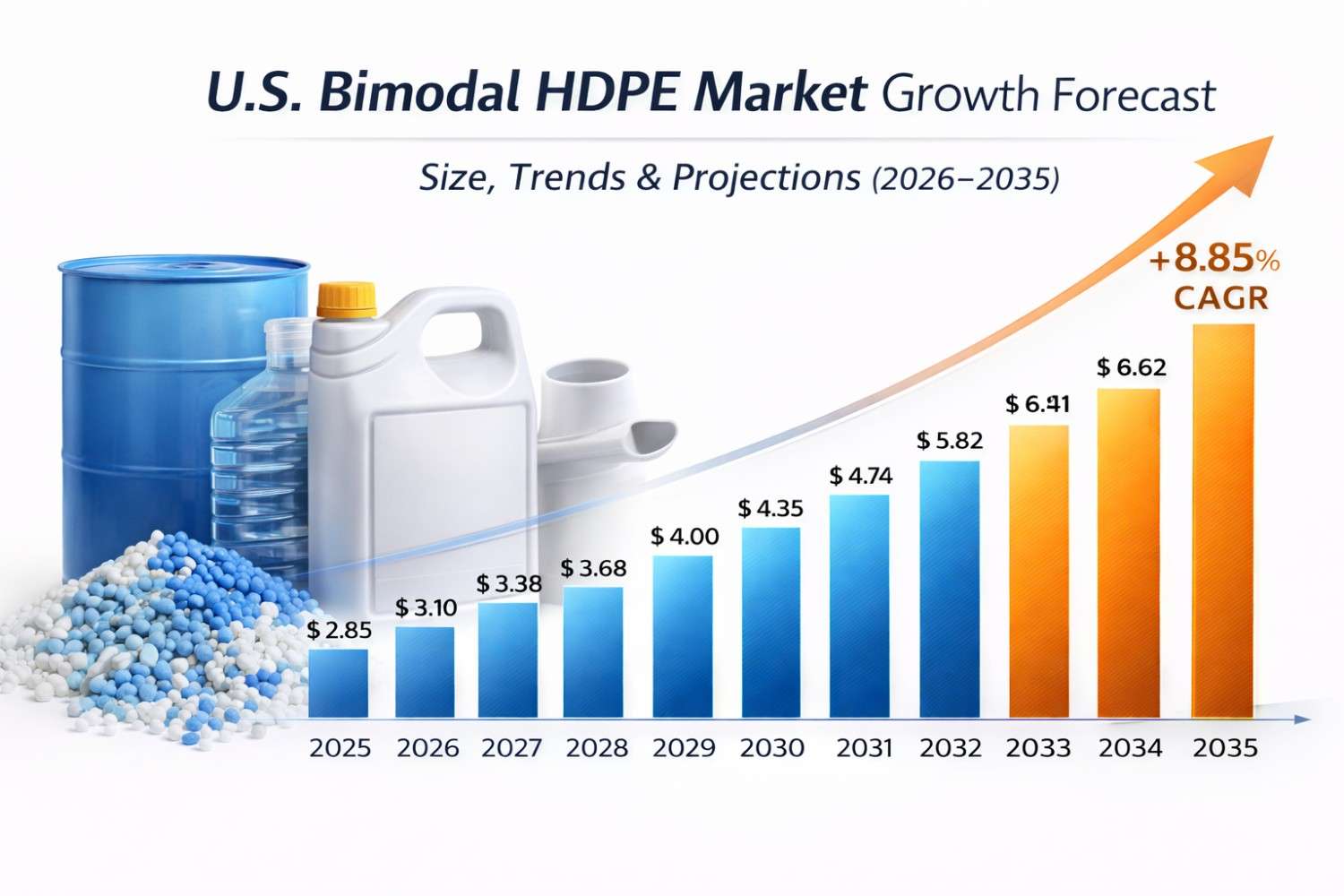
- Market Size (2025): USD 2.85 billion
- Estimated Market Size (2026): USD 3.10 billion
- Projected Market Size (2035): USD 6.65 billion
- CAGR (2026–2035): 8.85%
By 2032, the market is expected to surpass approximately USD 5.4 billion, reflecting accelerated adoption in advanced packaging and infrastructure applications. Bimodal HDPE, known for its superior strength-to-weight ratio and processability, is increasingly replacing conventional polymers. The U.S. market is characterized by innovation in catalyst technologies and resin customization, making it a key growth hub for next-generation polyethylene solutions.
What Are the Primary Drivers for the U.S. Bimodal HDPE Market?
The growth of the U.S. bimodal HDPE market is largely anchored in the material’s ability to meet modern performance and sustainability requirements. One of the most prominent drivers is the rising demand for lightweight yet highly durable materials, particularly in consumer goods packaging and automotive components. Bimodal HDPE offers enhanced mechanical strength, environmental stress crack resistance (ESCR), and improved processability, making it ideal for demanding applications.
Additionally, the packaging industry’s transition toward high-performance and recyclable materials is accelerating adoption. Flexible and rigid packaging manufacturers are increasingly opting for bimodal HDPE due to its ability to deliver thinner, stronger, and more sustainable packaging solutions.
Technological advancements also play a crucial role. Innovations in bimodal catalyst technologies are enabling precise control over molecular weight distribution, resulting in resins tailored for specific applications. Furthermore, the growing trend of resin customization is allowing manufacturers to develop application-specific grades, enhancing product performance and differentiation. These factors collectively position bimodal HDPE as a critical material in advanced polymer engineering.
Key Segments & Trends in the U.S. Bimodal HDPE Market
The U.S. bimodal HDPE market is primarily segmented by application, with packaging emerging as the dominant segment, driven by demand for bottles, containers, caps, and industrial packaging solutions. The material’s superior stiffness and toughness enable manufacturers to reduce material usage while maintaining performance, aligning with sustainability goals. The automotive sector is also gaining traction, utilizing bimodal HDPE in fuel tanks, ducts, and lightweight structural components to enhance fuel efficiency and reduce emissions.
Emerging trends include the increasing use of bimodal HDPE in pressure pipes and infrastructure applications, where durability and long service life are critical. Technological advancements in multi-layer extrusion and blow molding are further expanding application possibilities. Additionally, the market is witnessing a shift toward circular economy practices, with manufacturers integrating recycled content into bimodal HDPE formulations. The rise of smart packaging and high-barrier materials is also influencing product development, pushing the boundaries of performance and sustainability in polymer applications.
Competitive Landscape: Key Players and Strategic Developments
The U.S. bimodal HDPE market is shaped by a competitive mix of global petrochemical companies and specialized polymer producers. Key players include ExxonMobil Chemical, Chevron Phillips Chemical Company, LyondellBasell Industries, INEOS, and Dow Inc. These companies are focusing on advanced catalyst technologies and process innovations to enhance product performance and expand their market presence.
Recent strategic moves highlight a clear emphasis on capacity expansion and product innovation. Leading players are investing in next-generation polyethylene plants equipped with advanced bimodal production capabilities. This allows for greater flexibility in resin design and improved cost efficiency. Additionally, partnerships with packaging and automotive manufacturers are enabling the development of application-specific solutions, strengthening customer relationships and market positioning.
Sustainability is also a major focus area. Companies are actively working on recyclable and low-carbon HDPE solutions, aligning with regulatory requirements and corporate ESG goals. Furthermore, investments in chemical recycling technologies are gaining momentum, aimed at closing the loop in plastic production and enhancing the value proposition of bimodal HDPE.
Data Insights, Recent Developments & Recommended Table Placement
A detailed data table should be placed here to summarize market size, growth trajectory, and key application segments for enhanced clarity.
Key Data Highlights:
- Strong CAGR of 8.85% through 2035
- Market expected to more than double from USD 3.10 billion (2026) to USD 6.65 billion (2035)
- High demand from packaging and automotive sectors
Recent Developments:
- Launch of advanced bimodal HDPE grades for pressure pipe applications
- Expansion of polyethylene production capacities in North America
- Increased adoption of recycled HDPE in bimodal formulations
- Advancements in catalyst technologies enabling better molecular control
Additional bullet insights:
- Growing demand for lightweight industrial containers
- Rising investments in circular polymer solutions
- Enhanced use in infrastructure and energy sectors
Conclusion: What is the Future Outlook?
The U.S. bimodal HDPE market is poised for robust and innovation-driven growth, supported by its unique material advantages and expanding application base.
Looking ahead:
- Bimodal HDPE will play a central role in sustainable packaging solutions
- Technological advancements will unlock new high-performance applications
- Demand will continue to rise in automotive, infrastructure, and industrial sectors
From an analyst’s perspective, the market’s future will be defined by material innovation, sustainability integration, and strategic collaborations. Companies that invest in advanced production technologies and align with evolving environmental standards will be best positioned to capitalize on this high-growth opportunity.
About Us
Towards Chemical and Materials is a leading global consulting firm specializing in providing comprehensive and strategic research solutions across the chemical and materials industries. With a highly skilled and experienced consultant team, we offer a wide range of services designed to empower businesses with valuable insights and actionable recommendations.
Our Trusted Data Partners
Precedence Research | Statifacts | Towards Packaging | Towards Healthcare | Towards Food and Beverages | Towards Chemical and Materials | Towards Consumer Goods | Nova One Advisor |
For Latest Update Follow Us: https://www.linkedin.com/company/towards-chem-and-materials/
USA: +1 804 441 9344
APAC: +61 485 981 310 or +91 87933 22019
Europe: +44 7383 092 044
Email: [email protected]


Leave a Reply