According to Towards Chemical and Materials, the global polypyrrole (PPy) bioelectronics market is experiencing steady expansion due to the growing demand for conductive and biocompatible materials used in advanced medical technologies. Polypyrrole is widely used in bioelectronic devices because of its high electrical conductivity, chemical stability, and ease of functionalization, which makes it suitable for applications such as biosensors, neural interfaces, and drug delivery systems.
Download a Sample Report Here@ https://www.towardschemandmaterials.com/download-sample/6208
The global market size was valued at USD 310.29 million in 2025 and is projected to grow from USD 361.36 million in 2026 to approximately USD 1,424.08 million by 2035, registering a CAGR of 5.25% between 2026 and 2035. This growth is largely supported by the increasing use of flexible and bioresorbable electronics for healthcare monitoring and diagnostic applications.
By product type, the pure polypyrrole (PPy) segment accounted for the largest revenue share of 48.19% in 2025, mainly due to its superior electrochemical responsiveness that makes it ideal for high-sensitivity sensing technologies. By application, electrochemical and enzymatic biosensors led the market with a 37.83% share in 2025, driven by their increasing use in portable and real-time diagnostic devices.
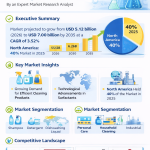
Regionally, North America held the largest market share of 40.82% in 2025, supported by strong research infrastructure, technological innovation, and rising adoption of bioelectronic medical devices.
Market Highlights
Polypyrrole Bioelectronics Market Dynamics
Market Drivers
One of the key drivers of the polypyrrole bioelectronics market is the increasing demand for advanced biosensing technologies. Conductive polymers like polypyrrole enable highly sensitive and rapid detection systems, which are essential for medical diagnostics, environmental monitoring, and food safety testing.
Another major driver is the growing adoption of implantable and wearable healthcare devices. Polypyrrole’s flexibility, conductivity, and biocompatibility make it ideal for devices that interact directly with biological tissues, including neural implants and wearable health monitoring sensors.
In addition, continuous advancements in bioelectronic medicine and neural interface technologies are encouraging the use of conductive polymers for improving signal transmission and reducing impedance in implantable devices.
Market Restraints
Despite its advantages, the market faces certain limitations. Material degradation and long-term stability challenges in physiological environments can affect device performance over time. This remains a concern, particularly for long-term implantable medical devices.
Another restraint is the complexity of large-scale manufacturing and integration of conductive polymers into commercial medical devices. The need for precise fabrication techniques and regulatory compliance may slow down market adoption in some regions.
Market Opportunities
The growing focus on personalized healthcare and remote patient monitoring presents significant opportunities for the market. The increasing demand for wearable biosensors and smart medical devices is expected to expand the use of polypyrrole-based materials.
Additionally, nanocomposite development and nanostructured PPy materials offer strong growth potential. These advanced materials enhance conductivity, surface area, and durability, allowing the development of more efficient and stable bioelectronic devices.
Expanding research activities in drug delivery systems and tissue engineering also create opportunities for integrating conductive polymers into next-generation biomedical technologies.
Market Challenges
One of the major challenges for the industry is maintaining long-term biocompatibility and electrical stability in medical implants. Continuous exposure to biological environments can affect polymer structure and performance.
Another challenge is the high cost associated with research and clinical validation of bioelectronic devices. Extensive testing and regulatory approval processes can delay commercialization and increase development costs.
Polypyrrole Bioelectronics Market Emerging Trends
- The market is witnessing several important technological trends. One major trend is the development of high-performance neural interfaces. Conductive polymers such as polypyrrole are being used to create flexible electrodes that improve signal quality and reduce impedance in neural implants and electroceutical devices.
- Another key trend is the growth of nanocomposite conductive polymers. Researchers are integrating polypyrrole with nanomaterials to enhance conductivity, mechanical strength, and stability in biological environments.
- There is also increasing adoption of wearable biosensors and disposable diagnostic devices. Polypyrrole’s strong redox properties make it suitable for high-sensitivity sensors used in healthcare monitoring, food safety testing, and environmental analysis.
Polypyrrole Bioelectronics Market Regional Insights
The North America polypyrrole bioelectronics market size was valued at USD 126.66 million in 2025 and is expected to be worth around USD 1,424.08 billion by 2035, exhibiting at a compound annual growth rate (CAGR) of 5.25% over the forecast period from 2026 to 2035. North America dominated the market share 40.82% in 2025, driven by advancements in neural interfaces, wearable biosensors, and tissue engineering, which propel the growth of the market in the region.
North America
North America held the largest market share of 40.82% in 2025, making it the leading regional market. Growth in this region is driven by strong investment in biomedical research, advanced healthcare infrastructure, and increasing development of neural interface technologies.
The United States leads the regional market due to significant research funding, collaborations between polymer scientists and biomedical engineers, and growing demand for innovative implantable medical devices. Continuous development in wearable electronics and personalized healthcare solutions further strengthens the region’s position in the market.
Europe
Europe accounted for approximately 20% of the global market share in 2025. The region benefits from a strong presence of medical device manufacturers and ongoing investment in healthcare innovation.
Countries such as Germany are emerging as major hubs for conductive polymer research. The growing use of biocompatible materials in biosensors, neural interfaces, and drug delivery systems is supporting the expansion of the European polypyrrole bioelectronics market.
Asia Pacific
Asia Pacific represented 18% of the global market in 2025 and is expected to record the fastest growth during the forecast period. Increasing investment in healthcare technologies, rapid industrial development, and growing demand for wearable medical devices are key factors driving market growth.
Countries such as India, China, Japan, and South Korea are investing heavily in research related to biosensors, flexible electronics, and biomedical engineering. Rising digitalization and supportive government policies for advanced manufacturing are further accelerating market expansion in the region.
Latin America
The Latin American market accounted for around 10% of the global revenue share in 2025. Growth in this region is supported by the gradual adoption of advanced healthcare technologies and increasing research activities in biomedical engineering.
Improved healthcare infrastructure and growing awareness of advanced diagnostic technologies are expected to drive further market development in the coming years.
Middle East and Africa
The Middle East and Africa region held approximately 11% of the global market share in 2025. Market growth is mainly supported by expanding healthcare investments, increasing adoption of modern medical technologies, and government initiatives to improve healthcare infrastructure.
Although the region is still developing in terms of bioelectronics research, rising interest in advanced diagnostic and implantable medical technologies is expected to contribute to gradual market expansion.
Request Research Report Built Around Your Goals: sales@towardschemandmaterials.com
Polypyrrole Bioelectronics Market Recent Developments
- In June 2025, researchers at BITS Pilani Hyderabad Campus developed a food-based nano conductive paste (FN-CoP) made from edible materials such as oral rehydration salts (ORS), activated carbon, and gelatin. The innovation offers a non-toxic conductive alternative for bioelectronic applications.
- In May 2025, Salvia BioElectronics secured USD 60 million in Series B funding to advance its MySalvia Therapy, a bioelectronic implant designed to treat chronic migraine through targeted neuromodulation.
- In October 2025, Rice University collaborated with ARPA‑H to host a summit focused on implantable biohybrid devices. The event highlighted the role of bioelectronic technologies in treating conditions such as cancer, immune disorders, and metabolic diseases.
Fiber Reinforced Polymer Composites Market – Current Status and Future Innovations
Immediate Delivery Available | Buy This Premium Research Report (Global Deep Dive
USD 3200) @ https://www.towardschemandmaterials.com/checkout/6208
For more information, visit the Towards Chemical and Materials website or email the team at sales@towardschemandmaterials.com| +1 804 441 9344
More Insights in Towards Chemical and Materials:
- Polypyrrole Bioelectronics Market Manufacturers & Suppliers Company Analysis 2026-2035
- Bioethanol Market Size | Companies Analysis 2026- 2035
- Bioethanol Yeast Market Current Status and Future Innovations
- Polypyrrole Bioelectronics Market Manufacturers & Suppliers Company Analysis 2026-2035
- Thermochromic Polymer Films Market Manufacturers & Suppliers Company Analysis 2026-2035
- Conductive Polymer Fibers Market Manufacturers & Suppliers Company Analysis 2026-2035
- Biodegradable Electronics Polymers Market Manufacturers & Suppliers Company Analysis 2026-2035
- Amorphous Polyethylene Terephthalate Market Manufacturers & Suppliers Company Analysis 2026-2035
- Polypropylene Non-Woven Fabrics Market Manufacturers & Suppliers Company Analysis 2026-2035
- Polypropylene Random Copolymer Market Manufacturers & Suppliers Company Analysis 2026-2035
Immediate Delivery Available | Buy This Premium Research Report@ https://www.towardschemandmaterials.com/checkout/6206
Polypyrrole Bioelectronics Market Top Key Companies:
- Hyperion Catalysis
- Parker Hannifin Corporation
- Celanese Corporation
- KEMET Corporation
- Solvay SA
- Agfa-Gevaert N.V.
- Sigma-Aldrich
- Abbott & F. Hoffmann-La Roche
- Rieke Metals
Polypyrrole Bioelectronics Market Segments Covered
By Product Type
- Pure Polypyrrole (PPy)
- PPy Composites
- PPy Nanostructures
By Application
- Electrochemical & Enzymatic Biosensors
- Neural interfaces & Implantable Electrodes
- Wearable Bioelectrodes & Epidermal Sensors
- Tissue Engineering
- Other Applications
By Regional
- North America
- Europe
- Asia Pacific
- Latin America
- Middle East & Africa
Immediate Delivery Available | Buy This Premium Research Report@ https://www.towardschemandmaterials.com/checkout/6206
About Us
Towards Chemical and Materials is a leading global consulting firm specializing in providing comprehensive and strategic research solutions across the chemical and materials industries. With a highly skilled and experienced consultant team, we offer a wide range of services designed to empower businesses with valuable insights and actionable recommendations.
Our Trusted Data Partners
Towards chem and Material | Precedence Research | Statifacts | Towards Packaging | Towards Healthcare | Towards Food and Beverages | Towards Automotive | | Nova One Advisor | Nutraceuticals Func Foods | Onco Quant | Sustainability Quant | Specialty Chemicals Analytics | TCM Blog
For Latest Update Follow Us: https://www.linkedin.com/company/towards-chem-and-materials/
USA: +1 804 441 9344
APAC: +61 485 981 310 or +91 87933 22019
Europe: +44 7383 092 044
Leave a Reply