Executive Summary
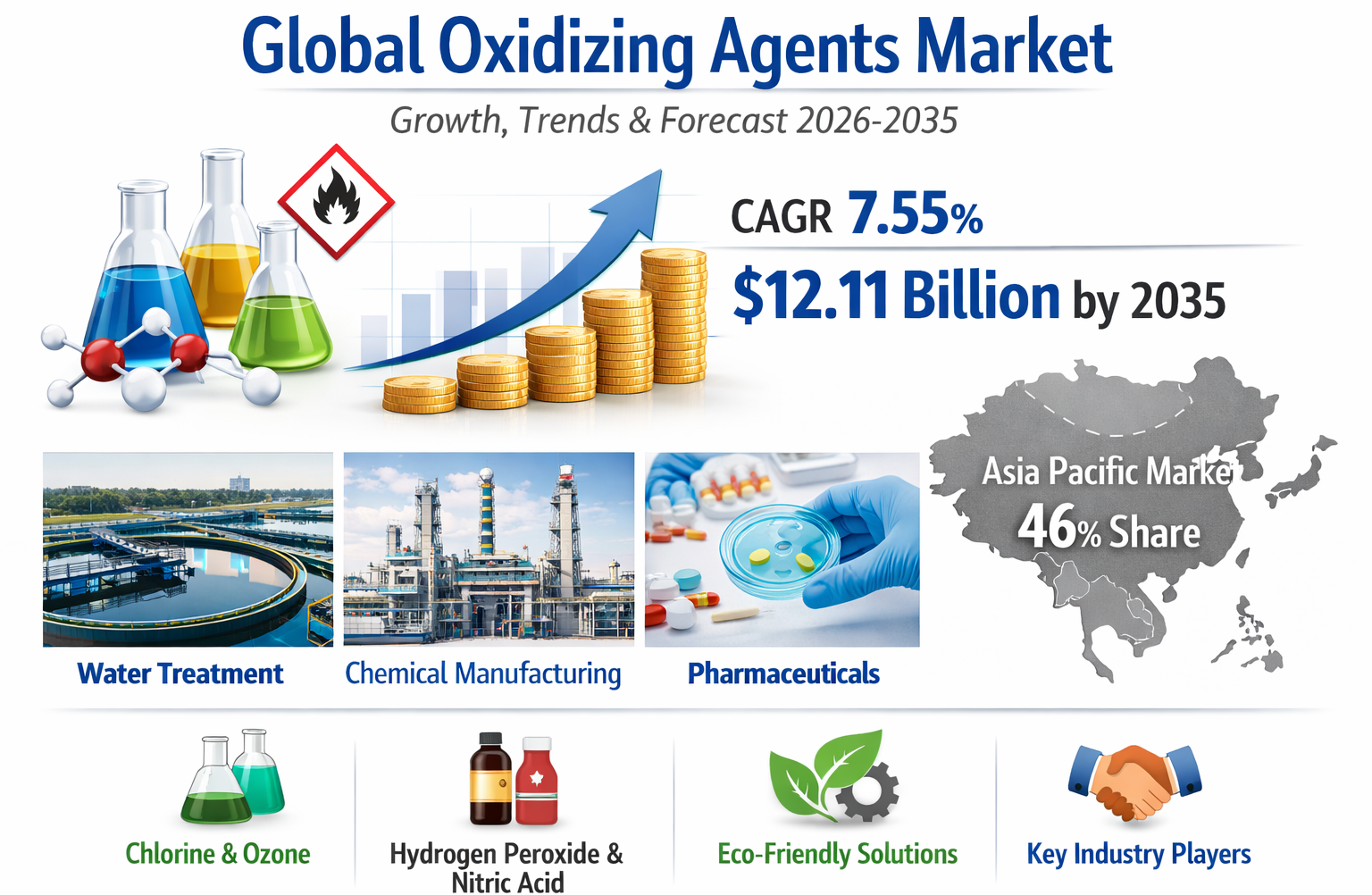
The global oxidizing agents market size was valued at USD 5.85 billion in 2025, and it is expected to grow steadily from USD 6.29 billion in 2026 to USD 12.11 billion by 2035, with a robust compound annual growth rate (CAGR) of 7.55% from 2026 to 2035. Oxidizing agents, crucial in industrial processes like chemical manufacturing, water treatment, and pharmaceuticals, are experiencing increased demand, particularly in the Asia Pacific region, which dominated the market in 2025 with a 46% share. This report delves into the market’s drivers, trends, key segments, and future growth trajectory, providing a comprehensive analysis for stakeholders and industry leaders.
What Are Oxidizing Agents and Their Key Applications?
Oxidizing agents are chemicals that accept electrons from other substances during a reaction, facilitating processes like disinfection, bleaching, and chemical synthesis. Commonly used in a variety of industries, these agents are essential in processes that require the oxidation of materials. Oxidizing agents find applications in sectors such as:
- Chemical Manufacturing: Used in polymerization reactions, chemical synthesis, and production of various chemicals.
- Water Treatment: Oxidizing agents like chlorine and ozone are used to disinfect and purify water.
- Pharmaceuticals: Employed in the synthesis of drugs and as disinfectants in medical environments.
- Pulp and Paper Industry: Used for bleaching paper and wood products.
- Textiles: Employed in the dyeing and finishing processes.
What Are the Primary Drivers for the Oxidizing Agents Market?
Several factors are propelling the growth of the oxidizing agents market:
1. Increasing Demand for Water Treatment and Disinfection
The global water treatment sector, including municipal and industrial water purification, is one of the leading drivers for oxidizing agents. The rising need for clean and safe drinking water, combined with regulations on wastewater treatment, fuels the demand for oxidizing agents like chlorine and ozone.
2. Industrial and Chemical Manufacturing Expansion
The growth of chemical industries, particularly in Asia Pacific, is significantly contributing to the rise in demand for oxidizing agents. Oxidizing agents are critical in various chemical synthesis processes, driving their adoption in the production of chemicals, plastics, and resins.
3. Growth in the Pharmaceutical and Healthcare Industry
Oxidizing agents play a critical role in the pharmaceutical industry, where they are used in drug synthesis and as disinfectants in medical applications. The ongoing expansion of the global pharmaceutical industry and the increasing demand for medical disinfectants are key factors contributing to market growth.
4. Technological Advancements in Oxidizing Agent Applications
Emerging technologies, such as ozone-based water treatment systems, are improving the efficiency of oxidizing agents. Additionally, innovations in the production of environmentally friendly and safe oxidizing agents are fostering growth in end-use industries.
Get Premium Report @https://www.towardschemandmaterials.com/checkout/6288
Key Segments & Trends in the Oxidizing Agents Market
By Type of Oxidizing Agent
- Chlorine
- Chlorine is one of the most widely used oxidizing agents in water treatment and chemical manufacturing. Its widespread use in disinfection and sanitation processes drives significant market share.
- Ozone
- Ozone is becoming increasingly popular in water treatment due to its superior disinfection properties and its eco-friendly nature. Ozone treatment eliminates harmful pathogens in water without the formation of chlorine by-products.
- Hydrogen Peroxide
- Widely used in industries such as textiles, chemicals, and environmental cleanup, hydrogen peroxide serves as a versatile and environmentally friendly oxidizing agent, especially for bleaching and disinfecting.
- Nitric Acid
- As an essential oxidizing agent in the production of fertilizers, explosives, and in metal processing, nitric acid remains a key segment within the industrial applications of oxidizing agents.
- Other Oxidizing Agents
- Includes potassium permanganate, potassium dichromate, and other specialty oxidizing agents used in various niche applications like laboratory analysis and niche chemical synthesis.
By Application
- Chemical Manufacturing
- The chemical industry remains the largest consumer of oxidizing agents, primarily for use in the production of polymers, resins, and other industrial chemicals.
- Water Treatment
- With the increasing demand for clean and potable water, the water treatment segment is a significant consumer of oxidizing agents like chlorine and ozone for disinfection and purification purposes.
- Pharmaceuticals and Healthcare
- Oxidizing agents are used in the synthesis of pharmaceutical products, particularly antibiotics, and in disinfecting medical equipment and surfaces.
- Pulp and Paper Industry
- Used for bleaching and disinfecting raw materials, oxidizing agents are crucial in the production of paper products.
- Textile Industry
- In textile manufacturing, oxidizing agents are utilized for dyeing, bleaching, and finishing processes.
By Region
- Asia Pacific
- Asia Pacific holds the largest share of the oxidizing agents market, accounting for 46% of the global market in 2025. The region’s rapid industrialization, particularly in China and India, contributes to the high demand for oxidizing agents in chemical manufacturing, water treatment, and pharmaceutical sectors.
- North America
- North America is expected to maintain steady growth in the market, driven by the robust demand for oxidizing agents in water treatment, chemical industries, and pharmaceuticals.
- Europe
- Europe’s market is being driven by stringent regulations on water treatment and environmental sustainability. The demand for eco-friendly oxidizing agents like ozone is expected to rise as industries transition to greener technologies.
- Latin America & Middle East & Africa
- These regions are expected to see moderate growth in the coming years, with increased investments in infrastructure development and water purification systems.
Emerging Technological Shifts in the Oxidizing Agents Market
Advancements in technology are playing a pivotal role in the oxidizing agents market, particularly in the areas of:
- Eco-friendly and Sustainable Products: As industries adopt more sustainable practices, there is a growing trend toward the development of eco-friendly oxidizing agents. Innovations in ozone and hydrogen peroxide-based systems offer environmentally safe and effective alternatives to traditional chemicals.
- Advanced Water Treatment Technologies: The introduction of advanced oxidation processes (AOPs), particularly using ozone and hydrogen peroxide, is revolutionizing water treatment, providing higher efficiency and better results in removing contaminants from water sources.
Competitive Landscape
The global oxidizing agents market is competitive, with several key players focusing on expanding their product portfolios and leveraging new technologies:
- BASF SE: Known for its chemical production and sustainable solutions, BASF remains a leading player in the oxidizing agents market, particularly in water treatment and industrial applications.
- Dow Chemical Company: Dow’s innovative approaches in developing green oxidizing agents for various industrial applications have contributed significantly to its growth in this sector.
- Evonik Industries AG: Evonik has a strong market presence due to its specialty chemicals division, which produces high-performance oxidizing agents for a wide range of industries.
- Solvay SA: With a strong focus on sustainability, Solvay offers eco-friendly solutions, particularly in hydrogen peroxide-based oxidizing agents for various applications.
These companies continue to expand their presence in emerging markets through acquisitions, partnerships, and expanding their production capabilities to meet rising demand.
What Does the Future Hold for the Oxidizing Agents Market?
The future of the oxidizing agents market looks promising, with steady growth projected over the next decade. The demand for these agents will continue to rise across various industries, particularly water treatment, pharmaceuticals, and chemical manufacturing. As environmental concerns gain prominence, the market will likely witness innovations in eco-friendly oxidizing agents that offer greater efficiency with lower environmental impact.
In conclusion, the oxidizing agents market is set for substantial growth, driven by technological advancements, increasing industrial applications, and strong demand in emerging regions like Asia Pacific. Stakeholders in this market should focus on sustainability, product innovation, and expanding market presence to capitalize on the growing demand for these essential chemicals.
Conclusion
The global oxidizing agents market is poised for substantial expansion, driven by industrial growth, technological advancements, and increasing regulatory pressures. With a projected CAGR of 7.55% from 2026 to 2035, key sectors like water treatment, pharmaceuticals, and chemical manufacturing will continue to serve as primary growth drivers. As market players innovate with eco-friendly and efficient solutions, the market is expected to evolve rapidly, offering ample opportunities for growth and innovation
About Us
Towards Chemical and Materials is a leading global consulting firm specializing in providing comprehensive and strategic research solutions across the chemical and materials industries. With a highly skilled and experienced consultant team, we offer a wide range of services designed to empower businesses with valuable insights and actionable recommendations.
Our Trusted Data Partners
Precedence Research | Statifacts | Towards Packaging | Towards Healthcare | Towards Food and Beverages | Towards Chemical and Materials | Towards Consumer Goods | Nova One Advisor |
For Latest Update Follow Us: https://www.linkedin.com/company/towards-chem-and-materials/
USA: +1 804 441 9344
APAC: +61 485 981 310 or +91 87933 22019
Europe: +44 7383 092 044



Leave a Reply