Executive Summary
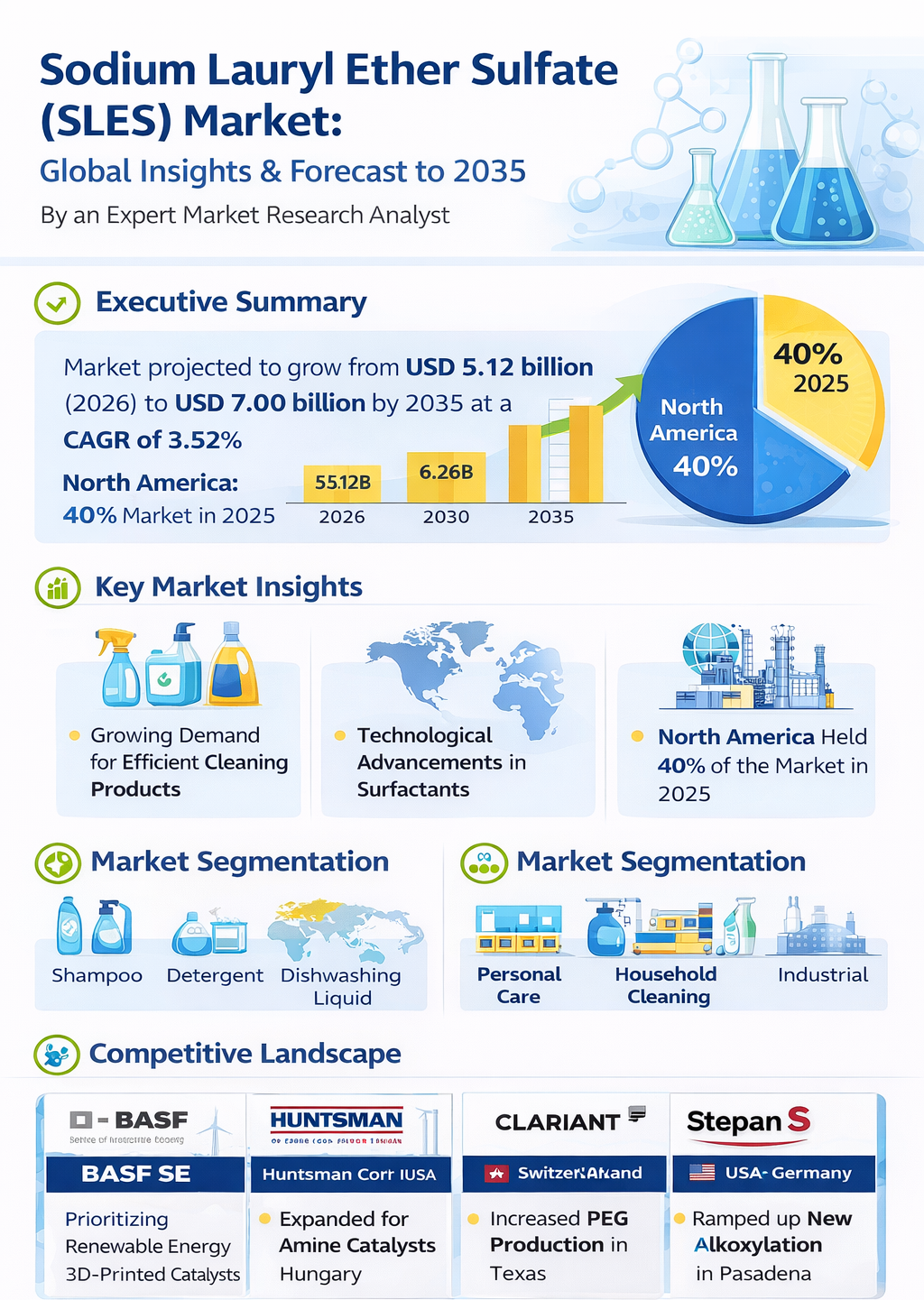
The global sodium lauryl ether sulfate (SLES) market was valued at USD 4.95 billion in 2025 and is projected to grow at a CAGR of 3.52% from 2026 to 2035, reaching an estimated value of USD 7.00 billion by 2035. North America will continue to dominate the market, accounting for the largest revenue share of 40.00% in 2025, largely driven by the growing demand for cleaning agents, personal care products, and industrial surfactants. This market is expanding due to the increasing need for effective cleaning solutions across various applications and the rise in demand for sustainable and efficient products.
What Is Sodium Lauryl Ether Sulfate (SLES)?
Sodium Lauryl Ether Sulfate (SLES) is a common surfactant found in many consumer products, such as shampoos, body washes, facial cleansers, and industrial detergents. Known for its ability to cleanse and foam, it plays a crucial role in the cleaning and personal care industries. As a key ingredient in formulations, SLES helps create a satisfying, foamy texture and provides effective cleansing action.
What Are the Key Drivers for the SLES Market?
- Demand for High-Performance Cleaning Products: The increasing need for more efficient and eco-friendly cleaning solutions is pushing the market growth. From household cleaning agents to industrial applications, demand for SLES continues to rise.
- Growth in Personal Care & Cosmetics: The use of SLES in shampoos, conditioners, face cleansers, and body washes continues to grow as consumers demand high-quality, foaming personal care products.
- Sustainability Initiatives: As environmental awareness increases, companies are focusing on developing green and bio-based surfactants. Sustainable production methods and formulations using renewable resources are gaining traction.
- Rising Household and Industrial Cleaning Applications: As both consumer demand for home care products and industrial cleaning solutions increase, SLES is an essential ingredient for creating formulations that meet performance expectations.
Market Segmentation: Key Applications and Trends
Personal Care & Cosmetics
SLES remains a critical ingredient in personal care formulations, particularly in shampoos, body washes, and facial cleansers. This segment will continue to dominate, with a growing trend towards mild surfactants in response to consumer preferences for sensitive skin products. Companies are focusing on developing products that balance both effective cleaning and skin compatibility.
- Growth Drivers: Increased consumer awareness regarding product safety and sustainability, combined with growing demand for multifunctional skincare solutions.
- Technological Innovations: Companies are focusing on bio-based surfactants derived from renewable sources to replace conventional SLES formulations.
Household and Industrial Cleaning
The demand for SLES in household cleaners, detergents, and industrial cleaning agents remains significant. The versatility and cleaning efficacy of SLES in removing dirt and grease make it indispensable in both consumer and industrial-grade products.
- Growth Drivers: Rising demand for eco-friendly cleaning products, growing commercial hygiene requirements, and innovations in industrial detergents.
- Emerging Trends: The use of SLES in eco-friendly formulations is on the rise, driven by consumer and regulatory demands for green products.
Emerging Applications in Other Industries
- Agricultural Surfactants: The role of SLES as an emulsifier in agricultural products like herbicides and pesticides is expanding.
- Textile and Leather: SLES is used as a wetting agent and emulsifier, facilitating textile and leather treatments.
Competitive Landscape
Key players in the sodium lauryl ether sulfate market include BASF SE, Huntsman Corporation, Clariant AG, and Stepan Company. These companies are focusing on both product innovation and sustainability to maintain a competitive edge in the market.
- BASF SE: BASF is prioritizing sustainability by transitioning its Ludwigshafen portfolio to renewable energy sources. They are also working on introducing 3D-printed catalysts to improve production efficiency.
- Huntsman Corporation: Known for its innovative chemical solutions, Huntsman recently expanded its Performance Products facility in Hungary to cater to growing demand for amine catalysts.
- Clariant AG: Clariant continues to expand its pharmaceutical-grade PEG production while also focusing on advanced surfactants for personal care applications.
- Stepan Company: As part of its Project Catalyst, Stepan is focusing on enhancing production capabilities, including ramping up its Pasadena alkoxylation facility to meet growing demand.
Regional Market Outlook
North America
- Market Share: North America held the largest share of 40% in 2025 and is expected to maintain this lead.
- Trends: The demand for SLES-based personal care products and industrial cleaning solutions remains high. Additionally, the increasing focus on sustainability is shaping the region’s market outlook.
Europe
Europe’s market growth is driven by the region’s emphasis on sustainable chemicals. The adoption of bio-based surfactants and cleaner production processes are key factors contributing to growth in this region.
Asia-Pacific
The Asia-Pacific region is expected to witness strong growth, driven by the rising consumption of personal care products, increasing disposable incomes, and heightened industrial production.
- Key Countries: China, India, Japan, and South Korea are the leading contributors to growth in this market.
Latin America & Middle East & Africa
These regions are seeing gradual growth due to increasing industrialization, heightened consumer awareness regarding product quality, and the growing demand for personal care items.
Conclusion: What Does the Future Hold for the SLES Market?
The sodium lauryl ether sulfate market is poised for steady growth from 2026 to 2035, primarily driven by demand from personal care and cleaning applications. As consumers and industries demand more sustainable solutions, the market will continue to evolve with a greater emphasis on bio-based surfactants and green chemistry.
- Opportunities: There is a growing opportunity in the development of eco-friendly formulations and the expansion of SLES applications beyond personal care and cleaning.
- Challenges: The market must overcome challenges related to raw material sourcing, sustainability concerns, and stringent environmental regulations.
In conclusion, the SLES market will experience growth underpinned by technological innovation, changing consumer preferences, and increasing regulatory pressures on sustainability. Companies that innovate in green surfactants and align with consumer trends will likely lead the way.

Leave a Reply